
How to Verify the Authenticity of Industrial Spare Parts Before Purchase
For industries that depend on continuous production, verifying the authenticity and quality of spare parts before purchase is an important part of procurement planning.
From automation modules and sensors to hydraulic valves, motors, and electrical components, buyers should follow a structured verification process to ensure that the parts they purchase meet the requirements of their equipment.
1. Check the Manufacturer’s Part Number
The manufacturer’s part number is one of the first details buyers should verify. Each industrial component typically has a specific model number or product code that helps identify its specifications and intended application.
Before placing an order, compare the part number on the component with the equipment documentation, original packaging, or manufacturer’s product information.
Check for differences in letters, numbers, suffixes, and revision codes, as even small variations may indicate a different model or specification.
For automation components, confirm that the exact model is compatible with the installed PLC, drive, control system, or machine configuration.
2. Examine Labels, Packaging, and Serial Numbers
Authentic industrial spare parts often include product labels, identification codes, serial numbers, or other traceability information. These details can help buyers determine whether a component matches the manufacturer’s product records.
Inspect the packaging and labels for inconsistent fonts, spelling mistakes, damaged seals, altered identification numbers, or discrepancies between the packaging and the component itself.
However, professional-looking packaging alone does not prove authenticity. Counterfeit products may imitate original packaging, so identification details should be checked against additional evidence whenever possible.
3. Purchase from Reliable Suppliers
The supplier’s reputation and sourcing practices are important indicators of procurement risk. Established suppliers are generally better positioned to provide accurate product information, traceability documentation, and support when questions arise.
Before purchasing, evaluate whether the supplier can identify the component’s source, explain its condition, provide relevant documentation, and clarify the warranty and return policy.
For branded industrial components, buyers can also check whether the supplier is listed as an authorized distributor by the manufacturer. If the supplier is not authorized, this does not automatically mean the product is counterfeit, but additional verification may be necessary.
Read More: How to Find Reliable Industrial Spare Parts in the UAE
4. Request Documentation and Traceability Records
Documentation can help establish the origin and specifications of an industrial spare part. Depending on the component and application, buyers may request:
- Manufacturer datasheets
- Certificates of conformity, where applicable
- Serial number or batch information
- Purchase and supply-chain records
- Warranty documentation
- Inspection or test reports, where relevant
Review the documents for consistency with the actual product, including the model number, manufacturer, ratings, and revision.
Be cautious if a supplier refuses to provide reasonable supporting information or supplies documents that appear inconsistent with the component being offered.
5. Verify Technical Specifications
A genuine component must also be the correct component for the intended application. Even an authentic spare part can cause problems if it has the wrong rating, configuration, or revision.
For electrical and automation parts, check the operating voltage, current rating, output type, communication protocol, connection configuration, and relevant software or firmware requirements.
For hydraulic components, verify pressure ratings, flow capacity, connection dimensions, sealing materials, and fluid compatibility. For motors and mechanical parts, confirm dimensions, power ratings, mounting arrangements, speed requirements, and load capacity as applicable.
Matching these specifications helps prevent purchasing errors and makes it easier to identify suspicious discrepancies.
Read More: Essential Automation Spare Parts Every Factory Should Stock
6. Compare the Price with Market Expectations
Price is another useful factor to consider. An offer significantly below the usual market price may indicate a clearance sale, surplus inventory, a used or refurbished component, or a potential authenticity concern.
A low price does not automatically mean that a part is counterfeit. However, buyers should investigate the reason for the discount and confirm the product’s origin, condition, and warranty coverage before proceeding.
The total purchasing cost should also include shipping, testing, installation, and the potential cost of equipment downtime if the part proves unsuitable.
7. Inspect the Component Before Installation
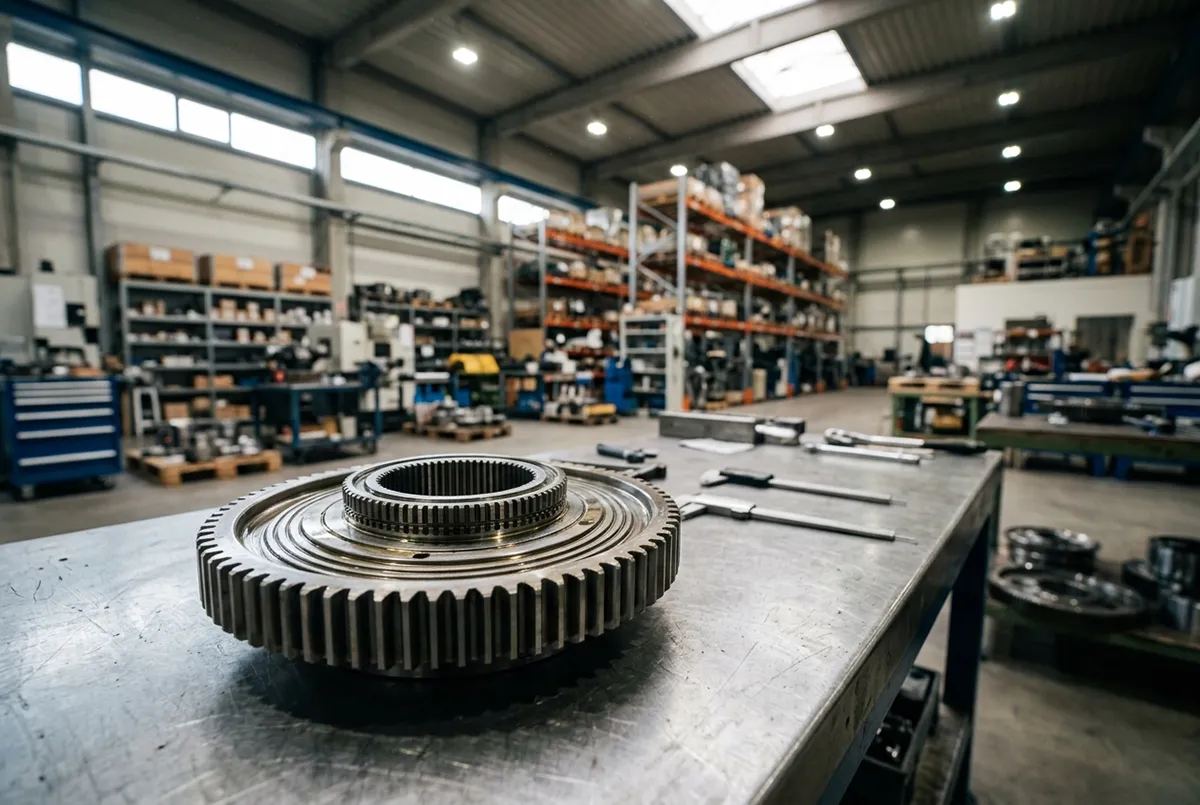
Where practical, inspect the part upon delivery and before installing it in production equipment. Compare its physical appearance, markings, dimensions, connectors, and construction with manufacturer documentation or a verified reference component.
Look for irregular workmanship, damaged housings, inconsistent labels, unusual connector arrangements, and signs of unauthorized modification.
For critical components, a qualified technician or engineering team may need to perform additional testing. Visual inspection alone cannot reliably establish the authenticity or internal quality of every electronic, hydraulic, or mechanical component.
8. Distinguish New, Used, and Refurbished Parts
Industrial spare parts may be sold as new, used, refurbished, or surplus inventory. These categories should not be treated as interchangeable.
A used or refurbished component is not necessarily counterfeit, but its condition and history may affect reliability, warranty coverage, and expected service life.
Before purchasing, ask the supplier to state the component’s condition clearly and explain whether it has been tested, repaired, or modified. For critical applications, determine whether the component’s condition is acceptable under your maintenance and operational requirements.
9. Use Additional Verification for Critical Components
Some industrial parts have a much greater impact on production than others. A failure in a critical PLC module, motor drive, safety-related device, or hydraulic control component may interrupt an entire production process or create operational risks.
For these components, consider stronger verification measures, such as confirming the serial number with the manufacturer, obtaining documented traceability, requesting appropriate test reports, and involving qualified technical personnel in the approval process.
The level of verification should reflect the component’s importance, the consequences of failure, and the difficulty of obtaining a replacement.
Conclusion
Verifying industrial spare parts before purchase helps reduce the risk of counterfeit products, incorrect replacements, equipment damage, and costly production interruptions. Buyers should check part numbers, inspect labels, evaluate suppliers, review documentation, confirm technical specifications, and verify product condition before approving an order.
For critical equipment, additional traceability checks and professional testing may be necessary. A consistent verification process helps industrial buyers make more informed purchasing decisions and protect the reliability of their machinery.
Source Reliable Industrial Spare Parts with SAEN
SAEN supplies industrial automation, electrical, hydraulic, mechanical, and pneumatic spare parts for manufacturing applications. If you need help sourcing a specific component, contact SAEN with its manufacturer, part number, equipment model, and technical requirements. Our team can help you explore suitable sourcing options and identify components that match your application needs.
Leave a Reply
No comments have been sent yet!