
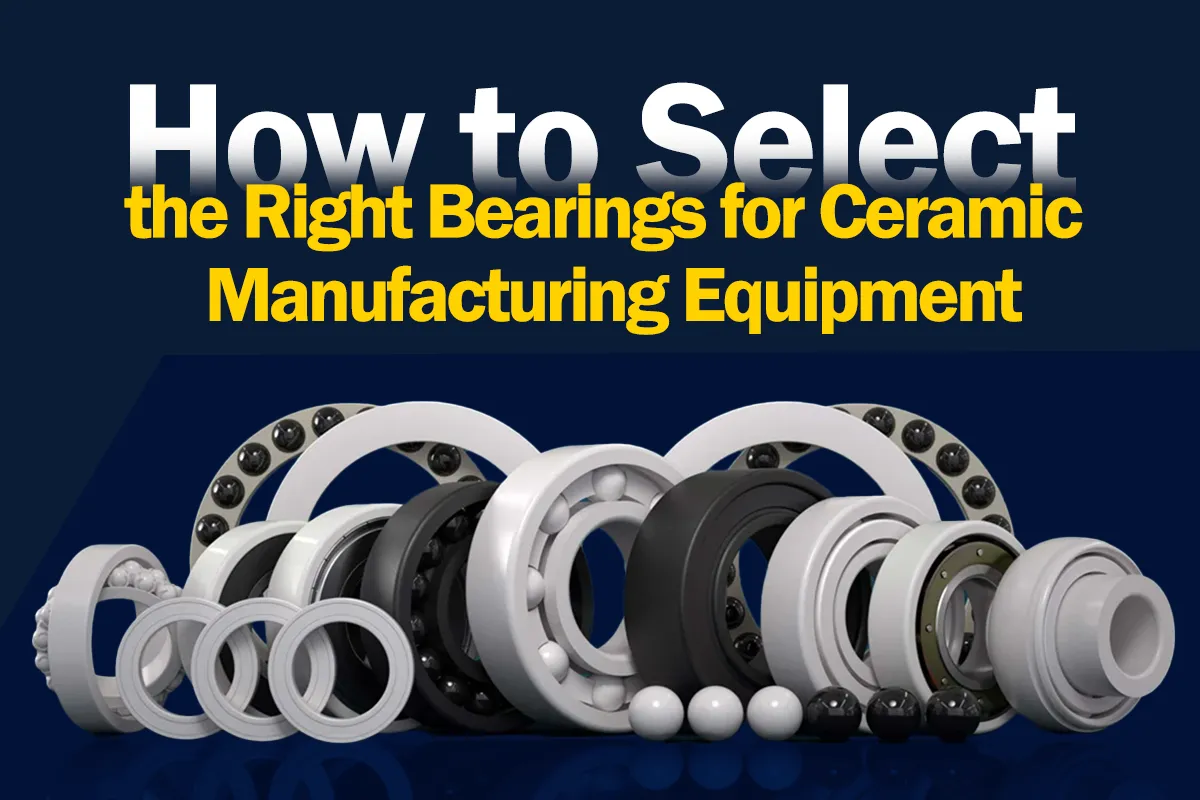
How to Select the Right Bearings for Ceramic Manufacturing Equipment
Bearings are essential components in ceramic manufacturing equipment, supporting rotating shafts and allowing machines to operate smoothly under demanding conditions. From conveyors and ceramic presses to mixers, dryers, and kiln systems, the right bearing can significantly affect equipment reliability, maintenance requirements, and production efficiency.
However, selecting a bearing should involve more than simply matching its dimensions. Ceramic manufacturing environments often expose bearings to high temperatures, dust, vibration, heavy loads, and continuous operation. Choosing a bearing based on the machine’s actual operating conditions is therefore essential for achieving long service life and preventing unexpected downtime.
Understand the Operating Conditions
The first step in bearing selection is understanding where and how the bearing will operate. A bearing used in a dusty conveyor system may require different protection from one installed near a high-temperature kiln.
Before selecting a bearing, maintenance teams should consider:
- Operating temperature
- Radial and axial loads
- Rotational speed
- Vibration levels
- Dust and contamination
- Moisture exposure
- Available lubrication
- Installation conditions
- Expected operating hours
These factors determine which bearing design, material, clearance, and protection are appropriate.
Consider the Load Requirements
Bearings are designed to handle different types and levels of loads. Ceramic manufacturing equipment may generate both radial loads and axial loads depending on the machine design.
For example, conveyor rollers may primarily experience radial loads, while other rotating equipment may place significant axial forces on the bearing. Selecting a bearing with insufficient load capacity can result in premature wear, overheating, and eventual failure.
Maintenance teams should therefore calculate or verify the expected load before choosing a replacement bearing.
Read More: How Predictive Maintenance Improves Ceramic Plant Performance
Select the Correct Bearing Type
Different industrial applications require different bearing designs. Common options include ball bearings, roller bearings, tapered roller bearings, spherical roller bearings, and cylindrical roller bearings.
Ball bearings are often suitable for applications requiring relatively high rotational speeds and moderate loads. Roller bearings, on the other hand, are generally preferred for applications involving heavier loads.
The correct choice depends on the machine’s operating requirements rather than simply selecting the most common bearing available.
Pay Attention to Temperature
Temperature is particularly important in ceramic manufacturing. Equipment located close to kilns, dryers, and other high-temperature processes can expose bearings to conditions beyond the range of standard components.
Excessive heat can degrade lubrication, reduce material strength, and shorten bearing life. For high-temperature applications, manufacturers may require specialized bearings, high-temperature lubricants, or additional protection.
Always verify the bearing’s allowable operating temperature before installation.
Protect Bearings From Ceramic Dust
Ceramic production generates considerable amounts of dust and fine particles. If contaminants enter a bearing, they can damage its internal surfaces and accelerate wear.
Sealed or shielded bearings can provide additional protection in dusty environments. However, the appropriate protection depends on the application, temperature, speed, and lubrication requirements.
Keeping surrounding equipment clean and preventing contaminants from reaching bearing surfaces are also important parts of bearing maintenance.
Choose the Correct Lubrication
Proper lubrication reduces friction and helps control bearing temperature and wear. Using the wrong lubricant or applying it incorrectly can significantly reduce bearing life.
The lubricant should be selected based on operating temperature, speed, load, and environmental conditions. Maintenance teams should also follow appropriate lubrication intervals and avoid both insufficient and excessive lubrication.
Check Bearing Clearance
Internal clearance is another important consideration when selecting bearings. Thermal expansion, operating temperature, shaft conditions, and load can affect the amount of clearance required.
A bearing with inappropriate clearance may experience excessive heat, vibration, or premature wear. For equipment operating at elevated temperatures, the correct clearance should be verified according to the application and manufacturer’s specifications.
Consider Speed and Rotation
Bearing selection must also account for the machine’s operating speed. A bearing suitable for a slow-moving conveyor may not be appropriate for high-speed rotating equipment.
High rotational speeds can increase friction and heat generation, making bearing design and lubrication particularly important. The selected bearing should have a speed rating appropriate for the equipment’s normal operating conditions.
Check Dimensions and Compatibility
Even a high-quality bearing can cause problems if it is not compatible with the equipment.
Before ordering a replacement, verify:
| Specification | What to Check |
|---|---|
| Bore diameter | Match the shaft size |
| Outside diameter | Match the housing |
| Width | Ensure correct installation space |
| Load rating | Match expected operating loads |
| Speed rating | Suit machine operating speed |
| Clearance | Consider temperature and operating conditions |
| Sealing | Match dust, moisture, and contamination exposure |
Checking the bearing number and equipment documentation can help prevent ordering errors.
Consider Bearing Quality and Service Life
The cheapest bearing is not necessarily the most cost-effective option. A low-quality component that fails prematurely can result in repeated replacement costs, emergency maintenance, and production downtime.
For critical equipment, manufacturers should consider the expected service life, operating environment, component quality, and supplier reliability when making purchasing decisions.
A higher-quality bearing that lasts longer may provide a significantly lower total maintenance cost over the equipment’s lifetime.
Monitor Bearings for Early Warning Signs
Even correctly selected bearings require regular monitoring. Changes in bearing condition can often be detected before complete failure.
Common warning signs include:
- Unusual noise
- Increased vibration
- Excessive heat
- Irregular rotation
- Lubricant leakage
- Reduced machine performance
Monitoring these symptoms allows maintenance teams to schedule replacement before a bearing failure causes additional equipment damage.
Common Bearing Applications in Ceramic Plants
Bearings are used throughout ceramic manufacturing facilities. Some common applications include:
- Conveyor systems: Bearings support rollers and drive components that transport materials through the production line.
- Ceramic presses: Bearings support moving and rotating components exposed to heavy mechanical loads.
- Mixers: Bearings support shafts operating under continuous loads and exposure to dust and raw materials.
- Dryers: Bearings may operate under elevated temperatures and continuous rotation.
- Kiln systems: Specialized bearings may be required for mechanical components operating in high-temperature environments.
How SAEN Can Help With Industrial Spare Parts
Selecting the right bearing can be challenging when equipment specifications or part numbers are unclear. SAEN supplies industrial spare parts and components for manufacturing facilities across the UAE and can assist businesses in identifying suitable replacement components for their equipment.
Whether you need bearings for conveyors, ceramic presses, motors, or other industrial machinery, consulting with an experienced supplier can help ensure that the replacement part matches the application’s technical requirements.
Conclusion
Selecting the right bearings for ceramic manufacturing equipment requires careful consideration of load, speed, temperature, contamination, lubrication, clearance, and compatibility. Choosing a bearing based only on size or price can lead to premature failure and unnecessary downtime.
By understanding the operating environment, selecting suitable bearing specifications, monitoring component condition, and working with a reliable industrial spare parts supplier, ceramic manufacturers can improve equipment reliability, reduce maintenance costs, and extend the service life of their machinery.
Leave a Reply
No comments have been sent yet!