
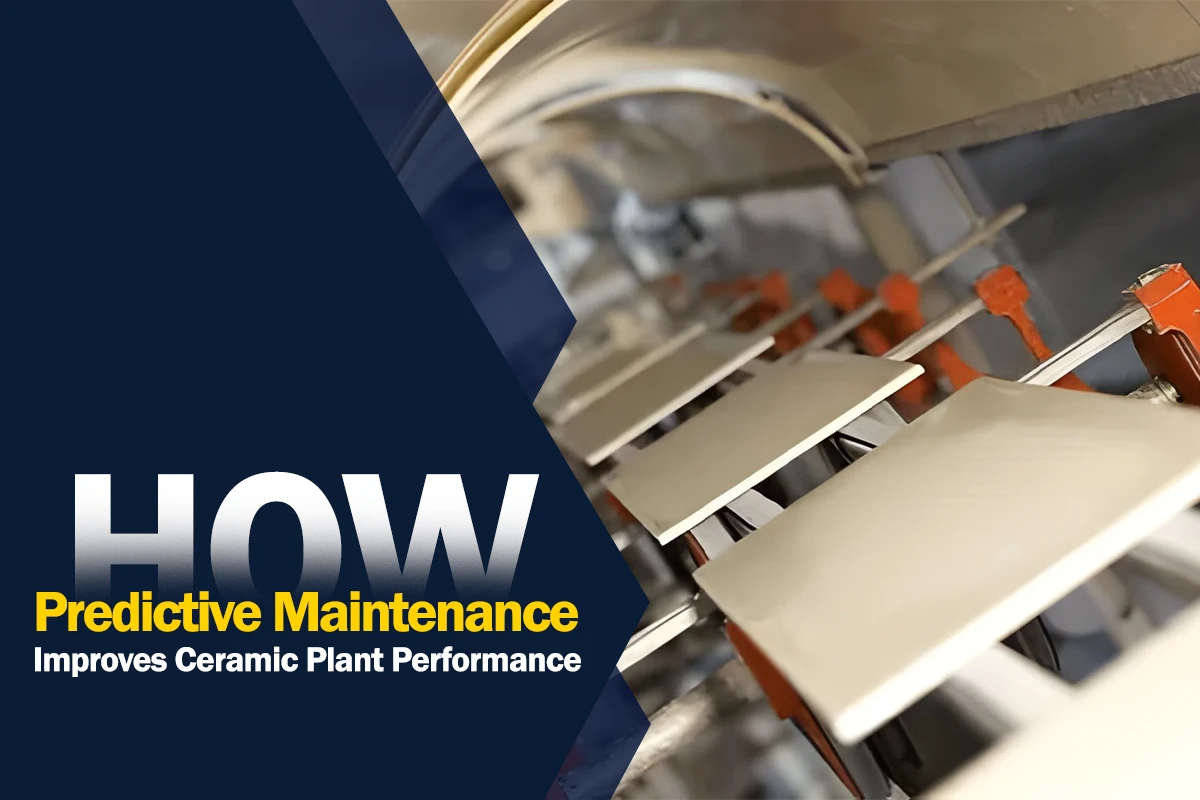
How Predictive Maintenance Improves Ceramic Plant Performance
In the ceramic industry, production efficiency depends on the reliability of equipment such as presses, kilns, conveyors, dryers, mixers, and automation systems. Unexpected equipment failures can bring production to a standstill, resulting in missed deadlines, higher maintenance costs, and reduced product quality. While traditional maintenance strategies focus on either scheduled servicing or repairing equipment after a breakdown, predictive maintenance takes a more proactive approach.
By using equipment data to identify early signs of wear and potential failure, predictive maintenance allows ceramic manufacturers to address problems before they disrupt production. The result is improved equipment reliability, lower operating costs, and more consistent manufacturing performance.
What Is Predictive Maintenance?
Predictive maintenance is a maintenance strategy that uses real-time equipment data and condition monitoring to determine when maintenance should be performed.
Instead of replacing parts based solely on a fixed schedule, maintenance teams monitor factors such as vibration, temperature, pressure, energy consumption, and machine performance. When the data indicates that a component is beginning to deteriorate, repairs or replacements can be planned before a failure occurs.
This approach reduces unnecessary maintenance while helping prevent unexpected equipment breakdowns.
Read More: How Automation, Food, and Ceramic Industries Benefit from Predictive Maintenance
Reducing Unplanned Downtime
One of the greatest advantages of predictive maintenance is its ability to reduce unexpected production interruptions.
Equipment failures often begin with small changes in performance that are difficult to detect during routine inspections. Monitoring systems can identify these changes early, allowing maintenance teams to intervene before the problem becomes serious.
For ceramic manufacturers, this means fewer emergency shutdowns, shorter repair times, and more reliable production schedules.
Read More: Which parts of the ceramic manufacturing process are most vulnerable to breakdowns?
Improving Equipment Reliability
Ceramic manufacturing equipment operates under demanding conditions, including high temperatures, heavy loads, vibration, and abrasive materials. These conditions gradually wear down mechanical and electrical components.
Predictive maintenance helps identify components that are approaching the end of their service life, allowing replacements to be scheduled during planned maintenance rather than after an unexpected failure.
This improves the reliability of equipment throughout the production line and reduces the likelihood of costly breakdowns.
Increasing Equipment Lifespan
Industrial equipment represents a major investment, making it essential to maximize its operational life.
By detecting problems early, predictive maintenance prevents small issues from developing into severe mechanical damage. Components such as bearings, motors, hydraulic pumps, sensors, and conveyor rollers can often be repaired or replaced before they affect surrounding equipment.
This reduces long-term wear and helps extend the lifespan of valuable production assets.
Supporting Consistent Product Quality
Reliable equipment contributes directly to consistent ceramic product quality.
For example, a failing thermocouple may provide inaccurate temperature readings inside a kiln, while worn hydraulic components in a ceramic press can lead to inconsistent pressing force. These issues may result in defective products long before complete equipment failure occurs.
Predictive maintenance helps maintain stable machine performance, ensuring that production conditions remain consistent and reducing the likelihood of product defects.
Lowering Maintenance Costs
Many manufacturers assume predictive maintenance increases maintenance expenses, but in reality, it often reduces overall costs.
Emergency repairs are typically more expensive than planned maintenance because they involve production downtime, urgent spare parts orders, and overtime labor. Predictive maintenance allows repairs to be scheduled in advance, making maintenance activities more efficient and cost-effective.
It also helps avoid replacing components that are still in good condition, reducing unnecessary maintenance work.
Read Also: Ceramic Press Maintenance Checklist for Maximum Productivity
Optimizing Spare Parts Management
Predictive maintenance and spare parts management work together to improve maintenance planning.
When maintenance teams know which components are likely to require replacement in the near future, they can ensure the necessary spare parts are available before repairs begin.
This reduces emergency purchasing, shortens repair times, and helps maintain continuous production.
Some of the most commonly monitored spare parts in ceramic plants include:
- Bearings
- Hydraulic seals
- Motors
- Thermocouples
- Sensors
- Conveyor rollers
- Belts
- Hydraulic valves
Maintaining inventory for these critical components supports faster and more efficient maintenance operations.
Read More: Spare Parts Management: The Key to Consistent Production in the Ceramic Industry
Which Equipment Benefits Most?
Although predictive maintenance can be applied throughout the factory, some equipment offers particularly high returns because of its importance to production.
| Equipment | Benefits of Predictive Maintenance |
|---|---|
| Ceramic Presses | Detects hydraulic and mechanical wear before failures occur. |
| Kilns | Monitors temperature accuracy and heating system performance. |
| Conveyors | Identifies bearing wear, motor issues, and belt problems. |
| Mixers | Detects vibration and drive system abnormalities. |
| Dryers | Monitors airflow systems and temperature consistency. |
| Automation Systems | Identifies sensor, PLC, and control system faults early. |
Focusing predictive maintenance on these critical assets can significantly improve overall plant performance.
Building a Successful Predictive Maintenance Program
Implementing predictive maintenance does not necessarily require replacing existing equipment. Many ceramic plants begin by monitoring their most critical machines and gradually expanding the program.
An effective strategy typically includes:
- Monitoring critical equipment performance
- Analyzing maintenance history
- Tracking equipment trends over time
- Scheduling maintenance based on equipment condition
- Maintaining an inventory of critical spare parts
- Training maintenance personnel to interpret equipment data
The combination of these practices creates a more proactive maintenance culture throughout the facility.
How SAEN Supports Ceramic Manufacturers
SAEN supplies high-quality industrial spare parts and technical support for ceramic manufacturing plants across the UAE. From hydraulic components and motors to thermocouples, sensors, bearings, automation systems, and kiln spare parts, SAEN helps manufacturers build reliable maintenance programs and reduce equipment downtime.
With dependable industrial solutions and expert technical assistance, SAEN supports ceramic factories in improving productivity and maintaining long-term equipment reliability.
Conclusion
Predictive maintenance has become an essential strategy for ceramic manufacturers seeking to improve equipment reliability, reduce downtime, and lower maintenance costs. By identifying equipment issues before they develop into major failures, manufacturers can extend machinery life, improve product quality, and maintain more consistent production.
When combined with effective spare parts management and support from a trusted supplier like SAEN, predictive maintenance helps ceramic plants operate more efficiently and remain competitive in today’s manufacturing environment. Contact SAEN for any further information.
Leave a Reply
No comments have been sent yet!