
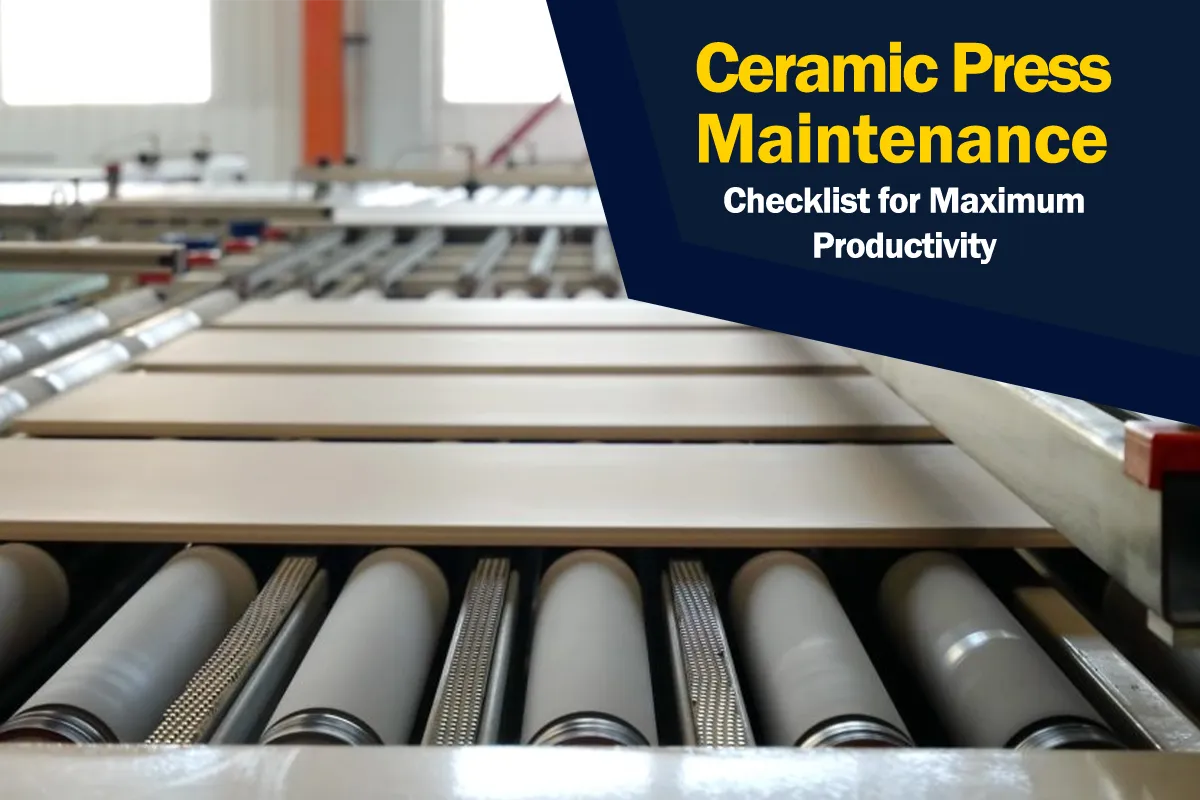
Ceramic Press Maintenance Checklist for Maximum Productivity
Ceramic presses are among the most important machines in any ceramic manufacturing facility. They operate under high pressure and continuous production demands, making them critical to both product quality and plant efficiency. Even a minor issue within a press can lead to production delays, inconsistent product quality, and costly downtime.
A well-planned maintenance routine helps manufacturers keep presses operating at peak performance while reducing the risk of unexpected breakdowns.
By following a structured maintenance checklist, ceramic plants can improve productivity, extend equipment lifespan, and lower maintenance costs.
Why Regular Press Maintenance Matters
Ceramic presses are exposed to constant mechanical stress, vibration, hydraulic pressure, and heavy workloads. Over time, components naturally wear and performance can gradually decline.
Routine maintenance provides several important benefits:
- Reduced unplanned downtime
- Improved product consistency
- Longer equipment lifespan
- Lower repair costs
- Increased production efficiency
- Improved workplace safety
Rather than waiting for equipment to fail, manufacturers should focus on identifying and correcting problems before they affect production.
Read More: How Automation, Food, and Ceramic Industries Benefit from Predictive Maintenance
Daily Inspection Checklist
The first line of defense against equipment failure is a simple daily inspection.
Operators should visually check the press before and during production, looking for signs of abnormal operation. Unusual noises, excessive vibration, hydraulic leaks, or irregular machine movements often indicate developing problems that require attention.
Daily checks should include monitoring hydraulic pressure readings, verifying safety systems are functioning correctly, and ensuring that moving components operate smoothly.
Key Daily Checks
- Inspect for hydraulic oil leaks
- Check pressure gauges and system readings
- Listen for unusual noises
- Verify emergency stop functions
- Monitor machine vibration levels
- Inspect hoses and connections
- Confirm proper lubrication levels
Weekly Maintenance Tasks
Weekly inspections allow maintenance teams to identify wear before it becomes a major issue.
Particular attention should be given to hydraulic systems, which are often the heart of ceramic press operations. Even small leaks or pressure fluctuations can affect performance and product quality.
Maintenance personnel should also inspect bearings, guide systems, and moving assemblies for signs of excessive wear.
Areas to Review Weekly
| Component | Inspection Focus |
|---|---|
| Hydraulic System | Leaks, pressure stability, hose condition |
| Bearings | Wear, noise, lubrication condition |
| Electrical Components | Loose connections, overheating |
| Sensors | Accuracy and responsiveness |
| Structural Components | Cracks, looseness, alignment |
Monthly Preventive Maintenance
Monthly maintenance should be more comprehensive and focus on overall equipment performance.
During these inspections, technicians should evaluate component wear, verify machine alignment, inspect control systems, and review historical maintenance records for recurring issues.
Hydraulic oil quality should also be assessed since contaminated oil is one of the leading causes of hydraulic component failure.
Monthly Maintenance Priorities
- Inspect hydraulic pumps and valves
- Test automation and control systems
- Check cylinder performance
- Verify machine alignment
- Examine seals and gaskets
- Clean electrical cabinets
- Review lubrication schedules
Pay Special Attention to Hydraulic Components
Most ceramic presses rely heavily on hydraulic power. Because of this, hydraulic system maintenance should be a top priority.
Pressure loss, contaminated oil, damaged seals, and worn valves can all reduce machine performance and increase the risk of downtime. Regular monitoring of hydraulic system health helps prevent costly repairs and production interruptions.
Signs of hydraulic problems may include slower machine cycles, inconsistent pressing force, abnormal temperatures, or visible oil leaks.
Monitor Automation and Control Systems
Modern ceramic presses often incorporate automation technologies to improve productivity and accuracy.
Sensors, PLC systems, control panels, and safety devices should be inspected regularly to ensure proper operation. A small sensor failure can affect machine accuracy and potentially stop production altogether.
Keeping automation components clean and protected from dust can significantly improve reliability.
Maintain a Critical Spare Parts Inventory
Even with excellent maintenance practices, some components will eventually require replacement.
Manufacturers should maintain stock of critical spare parts that commonly experience wear or have long delivery times. This allows maintenance teams to respond quickly when repairs are needed.
Common spare parts for ceramic presses include:
- Hydraulic seals
- Hydraulic valves
- Sensors
- Bearings
- Hoses
- Solenoid valves
- Pressure switches
- Electrical relays
- PLC components
Having these parts available can significantly reduce repair times and minimize production losses.
Read More: Spare Parts Management: The Key to Consistent Production in the Ceramic Industry
Warning Signs That Maintenance Is Needed
Many equipment failures provide warning signs before a complete breakdown occurs.
Watch for:
- Increased vibration
- Hydraulic pressure fluctuations
- Oil leaks
- Unusual operating noises
- Higher energy consumption
- Reduced production speed
- Inconsistent product quality
Addressing these issues early can prevent larger and more expensive repairs.
How SAEN Supports Ceramic Manufacturers
SAEN supplies high-quality industrial spare parts and maintenance solutions for ceramic manufacturing facilities across the UAE. From hydraulic components and automation systems to sensors, motors, valves, and press-related spare parts, SAEN helps manufacturers maintain reliable equipment performance and reduce downtime.
With technical expertise and access to trusted industrial brands, SAEN supports ceramic plants in building effective maintenance programs and improving operational efficiency. You can contact SAEN for any further information.
Conclusion
A proactive maintenance strategy is one of the most effective ways to maximize ceramic press productivity. Regular inspections, preventive maintenance, hydraulic system monitoring, and proper spare parts management help manufacturers reduce downtime and improve equipment reliability.
By following a structured maintenance checklist and partnering with a trusted supplier such as SAEN, ceramic manufacturers can achieve more consistent production, lower maintenance costs, and longer equipment life.
Leave a Reply
No comments have been sent yet!