
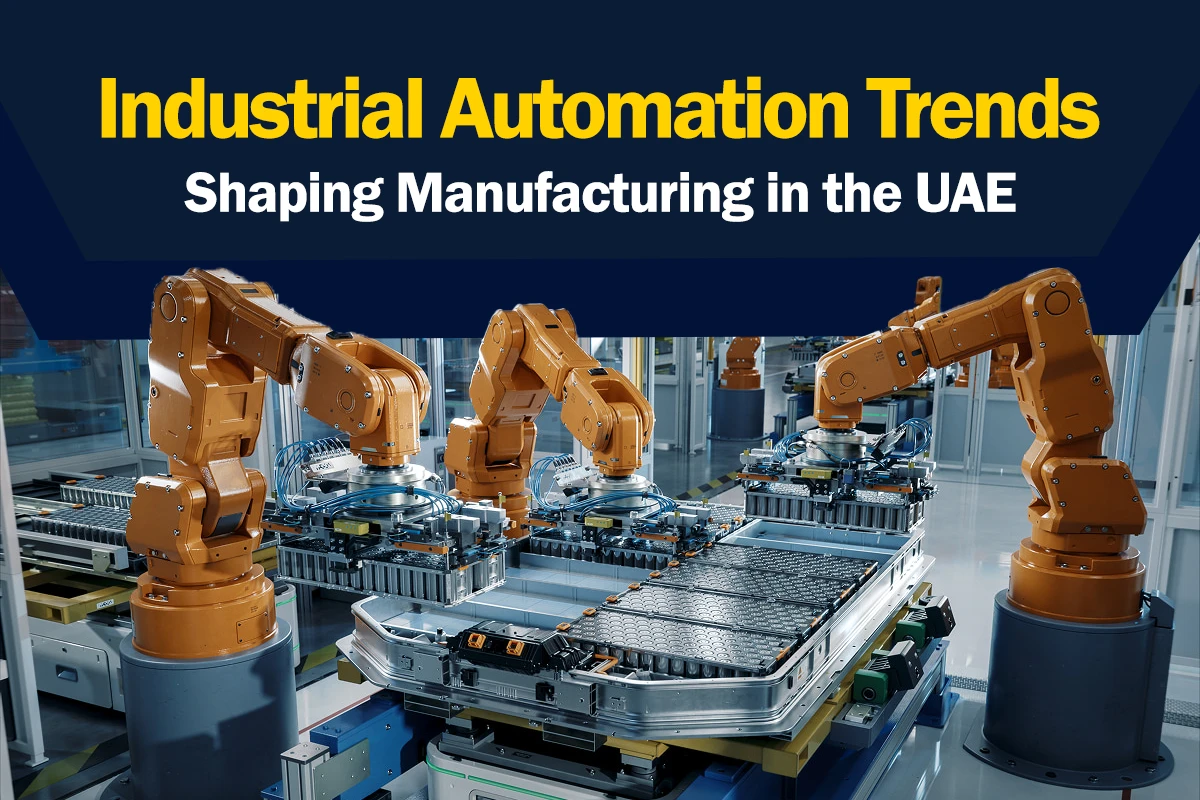
Industrial Automation Trends Shaping Manufacturing in the UAE
The UAE has become one of the Middle East’s leading manufacturing and industrial hubs, driven by investments in advanced technologies, smart factories, and sustainable production. As manufacturers strive to improve productivity and remain competitive, industrial automation has become a key driver of operational excellence. From food processing and ceramic manufacturing to packaging, chemicals, and logistics, businesses are increasingly adopting automated systems to increase efficiency, reduce costs, and improve product quality.
Understanding the latest industrial automation trends helps manufacturers make informed investment decisions and prepare for the future of smart manufacturing.
Why Automation Is Becoming Essential
Manufacturing facilities are under constant pressure to produce more while maintaining high quality and controlling operational costs. Automation allows companies to achieve these objectives by reducing manual intervention and improving process consistency.
Modern automation systems can monitor production in real time, optimize machine performance, and provide valuable operational data that supports better decision-making.
As the UAE continues to diversify its economy and invest in industrial growth, automation is becoming a necessity rather than a competitive advantage.
Smart Factories and Connected Manufacturing
One of the biggest trends shaping manufacturing in the UAE is the transition toward smart factories.
Modern production facilities are integrating machines, sensors, controllers, and software into connected systems that communicate with one another. This connectivity enables manufacturers to monitor production from a central platform, identify bottlenecks quickly, and improve overall equipment performance.
Connected manufacturing also provides greater visibility into production processes, helping managers make faster and more informed decisions.
Predictive Maintenance Is Replacing Reactive Repairs
Instead of waiting for equipment to fail, manufacturers are increasingly using predictive maintenance to identify problems before they lead to downtime.
By collecting data from sensors installed on motors, pumps, conveyors, hydraulic systems, and other critical equipment, maintenance teams can detect abnormal operating conditions and schedule repairs before failures occur.
This approach reduces emergency maintenance, improves equipment reliability, and supports more consistent production.
Read More: How to Reduce Downtime in Ceramic Manufacturing Through Proper Spare Parts Management
Increased Use of Robotics
Industrial robots are becoming more common across UAE manufacturing facilities, particularly for repetitive, high-speed, or hazardous tasks.
Robotic systems help improve production consistency while reducing manual handling and workplace risks. In many factories, robots are used for palletizing, packaging, material handling, assembly, and quality inspection.
As robotic technology becomes more flexible and affordable, its adoption is expected to continue growing across a wide range of industries.
Advanced Sensors and Real-Time Monitoring
Modern manufacturing relies heavily on accurate data.
Sensors now monitor temperature, pressure, vibration, humidity, flow, and machine performance in real time. This continuous monitoring allows operators to detect process variations immediately and respond before product quality or equipment reliability is affected.
Real-time monitoring also supports predictive maintenance and improves overall process control.
Read More: How to Extend the Life of Ceramic Manufacturing Equipment
Automation Improves Energy Efficiency
Energy management has become an important priority for manufacturers seeking to reduce operating costs and improve sustainability.
Automation systems help optimize equipment operation by reducing idle time, controlling energy-intensive processes, and adjusting machine performance according to production demand.
For facilities operating high-energy equipment such as ceramic kilns, compressors, pumps, and industrial ovens, these improvements can result in significant long-term savings.
Data-Driven Decision Making
Manufacturers are increasingly using production data to improve operational performance.
Automation systems collect information on machine utilization, downtime, maintenance history, production rates, and energy consumption. Analyzing this data allows managers to identify recurring problems, improve maintenance planning, and optimize production schedules.
Organizations that use operational data effectively are often able to improve productivity while reducing unnecessary costs.
Flexible Manufacturing Systems
Customer requirements continue to evolve, requiring manufacturers to adapt production more quickly than ever before.
Flexible automation systems make it easier to switch between products, adjust production volumes, and respond to changing market demands without extensive machine modifications.
This flexibility is particularly valuable for manufacturers producing multiple product lines or customized products.
Cybersecurity Is Becoming More Important
As manufacturing equipment becomes increasingly connected, protecting automation systems from cyber threats is now an essential part of industrial operations.
Manufacturers are investing in secure industrial networks, controlled user access, regular software updates, and system monitoring to protect production equipment and sensitive operational data.
Strong cybersecurity practices help maintain reliable operations while reducing the risk of costly disruptions.
Skilled Maintenance Teams Remain Essential
While automation reduces manual tasks, skilled technicians remain critical to successful manufacturing operations.
Modern maintenance teams must understand PLCs, industrial networks, sensors, robotics, hydraulic systems, and automated control equipment. Ongoing technical training enables maintenance personnel to diagnose problems quickly and keep automated production lines operating efficiently.
The combination of advanced technology and skilled professionals delivers the greatest improvements in reliability and productivity.
Key Automation Technologies Used in UAE Manufacturing
| Automation Technology | Primary Benefit |
|---|---|
| PLC Systems | Reliable machine control and process automation |
| Industrial Sensors | Real-time monitoring and accurate data collection |
| Robotics | Faster production and reduced manual labor |
| Variable Frequency Drives (VFDs) | Improved motor efficiency and energy savings |
| SCADA Systems | Centralized monitoring and production control |
| Predictive Maintenance Tools | Early fault detection and reduced downtime |
Each of these technologies plays an important role in helping manufacturers improve operational efficiency and remain competitive.
How SAEN Supports Industrial Automation
SAEN supplies high-quality industrial automation components and spare parts for manufacturers across the UAE. From PLCs, sensors, hydraulic components, motors, and actuators to industrial control equipment and spare parts for ceramic, food, and automated production lines, SAEN helps businesses improve equipment reliability and production efficiency.
With technical expertise and dependable product availability, SAEN supports manufacturers in implementing reliable automation solutions and maintaining continuous production. Contact SAEN for further information.
Conclusion
Industrial automation is transforming manufacturing across the UAE by improving productivity, reducing downtime, increasing energy efficiency, and supporting smarter decision-making. Trends such as predictive maintenance, connected factories, robotics, real-time monitoring, and data-driven operations are helping manufacturers build more efficient and competitive production facilities.
By investing in modern automation technologies and partnering with experienced suppliers like SAEN, manufacturers can improve operational performance while preparing for the future of industrial production.
Leave a Reply
No comments have been sent yet!