
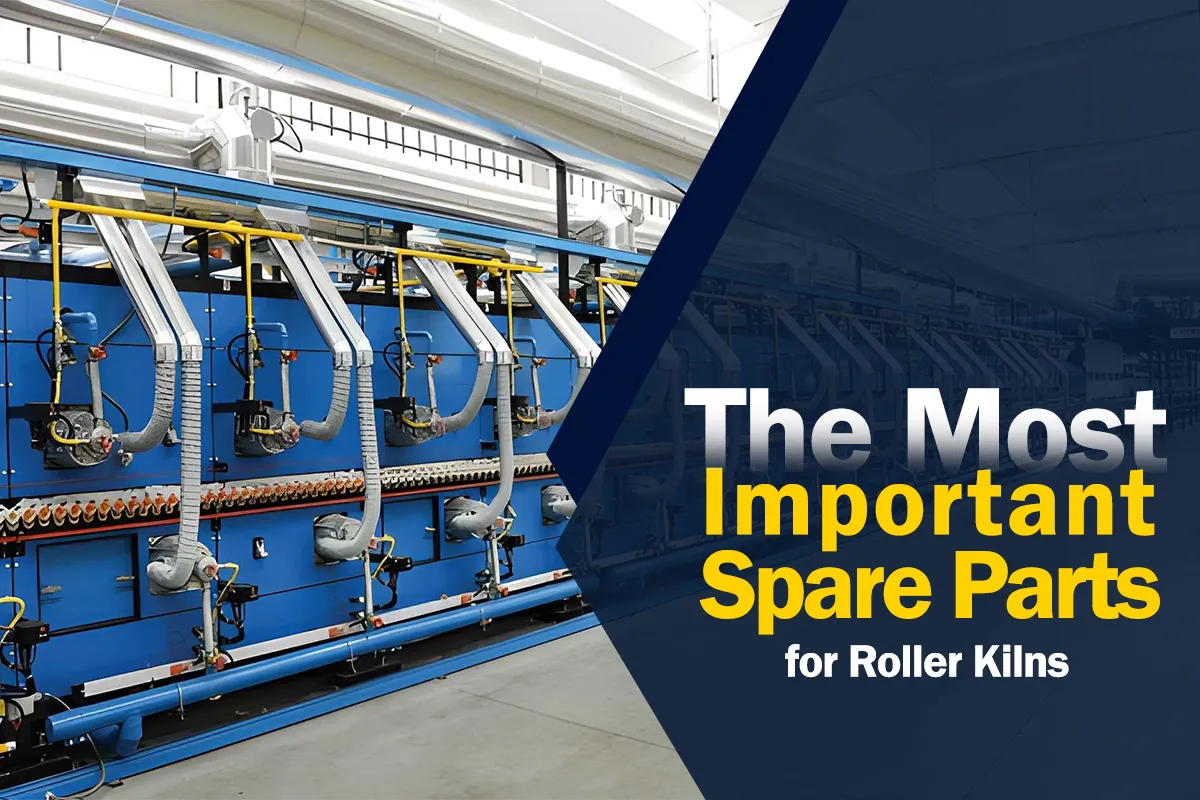
The Most Important Spare Parts for Roller Kilns
Roller kilns are essential equipment in modern ceramic manufacturing, particularly for the continuous production of wall tiles, floor tiles, porcelain, and other ceramic products. These kilns operate at high temperatures and often run continuously, placing significant stress on mechanical, electrical, hydraulic, and temperature-control components.
Because a failure in one critical component can interrupt the entire firing process, maintaining the right spare parts inventory is an important part of kiln maintenance. Having essential components available allows maintenance teams to respond quickly and reduce costly production downtime.
Why Spare Parts Are Critical for Roller Kilns
A roller kiln depends on many components working together. Rollers must transport ceramic products smoothly, heating systems must maintain precise temperatures, and sensors and control systems must continuously monitor operating conditions.
When a critical component fails, the consequences can extend beyond the failed part itself. Production may stop, products inside the kiln may be damaged, and restarting the system can require significant time and energy.
For this reason, manufacturers should identify their most critical roller kiln components and maintain suitable replacement parts in inventory.
Ceramic Kiln Rollers
The rollers are among the most important mechanical components in a roller kiln. They transport ceramic products through different temperature zones and must maintain consistent movement under demanding thermal conditions.
Rollers can experience wear, deformation, cracking, or alignment problems over time. A damaged roller can affect product movement and potentially cause tiles to become misaligned or damaged.
Keeping suitable replacement rollers available can help maintenance teams respond quickly to roller failures and minimize production interruptions.
Bearings and Bearing Components
Bearings support rotating components and allow them to operate smoothly. Continuous operation, high temperatures, dust, and insufficient lubrication can gradually cause bearing deterioration.
A failing bearing may produce unusual noise, increased vibration, or excessive heat. If ignored, it can eventually damage other mechanical components.
Regular inspection and timely replacement of bearings are therefore important for maintaining reliable roller kiln operation.
Thermocouples and Temperature Sensors
Temperature control is fundamental to ceramic firing. Thermocouples continuously measure temperatures within different kiln zones and provide information to the control system.
A damaged or inaccurate thermocouple can cause incorrect temperature readings, resulting in underfiring, overfiring, or inconsistent product quality.
Maintaining replacement thermocouples in stock allows factories to quickly restore accurate temperature measurement when a sensor begins to fail.
Heating Elements
Heating elements generate the heat required to achieve the firing temperatures needed for ceramic production. Continuous exposure to extreme temperatures gradually causes these components to deteriorate.
Worn heating elements may increase heating times, create temperature variations, and consume more energy. Keeping appropriate replacement heating elements available helps reduce the risk of extended downtime.
Fans and Motors
Fans and motors are essential for maintaining airflow and operating mechanical systems within a roller kiln. Their performance directly affects temperature distribution and material movement.
Motor or fan problems may appear as unusual noise, vibration, overheating, or reduced operating speed. Regular inspection can identify developing problems before complete failure occurs.
Drive Components
Roller kilns rely on drive systems to maintain consistent roller movement. Depending on the kiln design, these systems may include gears, chains, couplings, sprockets, and other mechanical components.
Wear in these components can cause irregular movement and affect product positioning. Maintaining frequently used drive components as spare parts can shorten repair times and improve equipment availability.
Seals and High-Temperature Components
Seals and related components protect mechanical systems from dust, heat, and other harsh operating conditions. Damaged seals can allow contamination to enter sensitive areas and accelerate component wear.
Although these parts may be relatively inexpensive compared with major kiln components, their failure can contribute to larger mechanical problems. They should therefore be included in routine inspections and spare parts planning.
Electrical and Automation Components
Modern roller kilns depend on automation systems to control temperature, speed, airflow, and other production parameters.
Critical electrical and automation components may include:
- Sensors
- Relays
- Controllers
- PLC modules
- Power supplies
- Variable frequency drives
- Control switches
A failure in one of these components can stop the kiln even when its mechanical systems are operating correctly.
Which Roller Kiln Spare Parts Should Be Prioritized?
Factories should not necessarily stock every component in large quantities. Instead, spare parts should be prioritized according to their effect on production and their availability.
| Spare Part | Importance |
|---|---|
| Kiln rollers | Essential for product transportation |
| Thermocouples | Critical for accurate temperature monitoring |
| Heating elements | Essential for maintaining firing temperatures |
| Bearings | Important for reliable roller rotation |
| Motors | Required for mechanical operation |
| Sensors | Support monitoring and automation |
| Drive components | Maintain consistent roller movement |
| PLC and control components | Control automated kiln functions |
| Seals | Protect mechanical components |
| Fans and blowers | Support airflow and temperature uniformity |
Parts with long procurement times or limited availability should receive particular attention when developing a critical spare parts inventory.
How to Reduce Roller Kiln Downtime
Effective maintenance begins before a component fails. Regular inspections can help identify worn rollers, deteriorating bearings, inaccurate sensors, and weakening heating elements.
Maintenance teams should also monitor changes in kiln performance. Increased energy consumption, unusual vibration, temperature fluctuations, longer firing cycles, or inconsistent product quality may indicate that a component requires attention.
Combining preventive maintenance with predictive monitoring can make spare parts planning even more effective. When a component shows signs of deterioration, the replacement can be prepared before failure occurs.
Read More: How to Reduce Downtime in Ceramic Manufacturing Through Proper Spare Parts Management
Why Genuine and Compatible Spare Parts Matter
Using the correct spare parts is essential for maintaining roller kiln performance. Components that do not meet the required specifications may fail prematurely or affect the performance of connected equipment.
For critical kiln systems, manufacturers should verify technical specifications, dimensions, operating temperature, compatibility, and manufacturer requirements before purchasing replacement components.
Quality spare parts can reduce repeated failures and help protect the long-term reliability of expensive kiln equipment.
How SAEN Supports Ceramic Manufacturers
SAEN supplies industrial spare parts and components for ceramic manufacturing facilities across the UAE. Its solutions cover areas including automation, hydraulic systems, motors, sensors, temperature-control components, and other industrial equipment used in demanding production environments.
For ceramic manufacturers operating roller kilns, reliable access to critical spare parts can help maintenance teams respond faster to equipment problems and reduce unnecessary production downtime. SAEN’s technical expertise can also assist factories in identifying suitable components for their specific equipment requirements. Contact us for further information.
Conclusion
Roller kilns depend on a combination of mechanical, thermal, electrical, and automation components to operate continuously and efficiently. Rollers, bearings, thermocouples, heating elements, motors, drive components, sensors, and control equipment are among the most important spare parts that ceramic manufacturers should consider when developing their inventory strategy.
By identifying critical components, monitoring equipment condition, and maintaining suitable replacement parts in stock, ceramic factories can reduce downtime and improve kiln reliability. Working with a dependable industrial spare parts supplier such as SAEN can further support efficient maintenance and uninterrupted ceramic production.
Leave a Reply
No comments have been sent yet!