
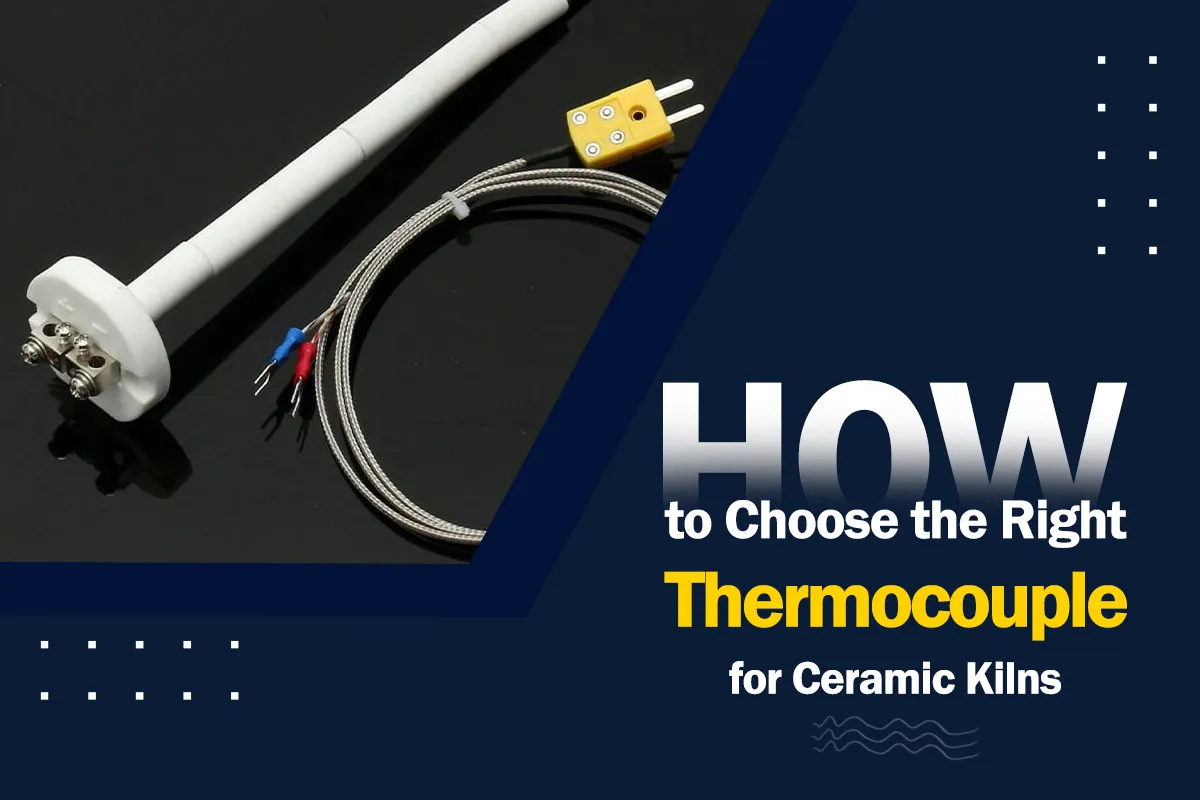
How to Choose the Right Thermocouple for Ceramic Kilns
Temperature control is one of the most critical factors in ceramic manufacturing. Whether producing tiles, sanitary ware, tableware, or technical ceramics, maintaining accurate kiln temperatures is essential for achieving consistent product quality. At the center of this process is the thermocouple—a sensor that continuously measures temperature and provides data to kiln control systems.
Choosing the right thermocouple can improve firing accuracy, extend equipment life, reduce maintenance costs, and prevent costly production defects. Understanding the key selection criteria helps ceramic manufacturers make informed decisions when replacing or upgrading kiln temperature sensors.
Why Thermocouples Are Important in Ceramic Kilns
Thermocouples play a vital role in controlling the firing process.
Their primary functions include:
- Measuring kiln temperature accurately
- Monitoring heating and cooling cycles
- Supporting automatic temperature control systems
- Preventing underfiring or overfiring
- Maintaining consistent product quality
A faulty or poorly selected thermocouple can lead to temperature variations that negatively affect ceramic strength, appearance, and durability.
Understand Your Kiln’s Operating Temperature
The first step in selecting a thermocouple is determining the temperature range of the kiln.
| Kiln Application | Typical Temperature Range |
|---|---|
| Low-fire ceramics | 900°C – 1100°C |
| Wall and floor tiles | 1000°C – 1250°C |
| Porcelain products | 1200°C – 1400°C |
| Technical ceramics | Up to 1700°C |
The thermocouple must be capable of operating reliably within the kiln’s maximum temperature range.
Common Thermocouple Types Used in Ceramic Manufacturing
Different thermocouple materials are designed for different operating conditions.
Type K Thermocouples
Type K thermocouples are among the most commonly used temperature sensors in industrial applications.
Advantages:
- Cost-effective
- Widely available
- Suitable for moderate temperatures
- Good general-purpose performance
Limitations:
- Shorter lifespan in extremely high-temperature kiln environments
Type S Thermocouples
Type S thermocouples are widely used in ceramic manufacturing due to their stability and accuracy at elevated temperatures.
Advantages:
- Excellent temperature accuracy
- Long service life
- Stable performance during continuous operation
Best suited for:
- High-temperature ceramic kilns
- Tile and porcelain production
Type R Thermocouples
Type R thermocouples offer performance similar to Type S but with slightly different material composition.
Advantages:
- High accuracy
- Excellent durability
- Reliable operation at elevated temperatures
Applications:
- High-temperature industrial furnaces
- Advanced ceramic manufacturing
Type B Thermocouples
Type B thermocouples are designed for extremely high-temperature applications.
Advantages:
- Exceptional temperature capability
- Long lifespan under severe conditions
Common uses:
- Technical ceramics
- Specialty firing processes
- Ultra-high-temperature kilns
Consider the Kiln Environment
Temperature is not the only factor affecting thermocouple performance.
Ceramic kiln environments often expose sensors to:
- Dust and airborne particles
- Chemical vapors
- Thermal cycling
- Mechanical vibration
- High humidity during certain processes
Selecting a thermocouple with appropriate protection helps extend sensor life and maintain measurement accuracy.
Choose the Right Protection Tube
The protection tube shields the thermocouple from direct exposure to harsh kiln conditions.
Common protection materials include:
| Protection Material | Benefits |
|---|---|
| Ceramic | Excellent heat resistance |
| Alumina | High-temperature durability |
| Silicon carbide | Strong resistance to thermal shock |
| Metal alloys | Suitable for lower-temperature applications |
The correct protection tube can significantly increase thermocouple lifespan and reduce replacement frequency.
Evaluate Accuracy Requirements
Different ceramic products require different levels of temperature control.
For example:
- Decorative ceramics may tolerate small temperature variations.
- Porcelain production often requires tighter temperature control.
- Technical ceramics may demand extremely precise firing conditions.
Higher accuracy thermocouples often provide better consistency and reduced product rejection rates.
Consider Maintenance and Replacement Frequency
Thermocouples naturally degrade over time due to prolonged exposure to heat.
When selecting a thermocouple, consider:
- Expected service life
- Replacement costs
- Ease of installation
- Availability of spare units
Longer-lasting thermocouples may have a higher initial cost but often reduce maintenance expenses over time.
Warning Signs That a Thermocouple Needs Replacement
Maintenance teams should monitor for signs of thermocouple deterioration, including:
- Inconsistent temperature readings
- Slower response times
- Frequent temperature fluctuations
- Product quality variations
- Visible damage to sensor tips or protection tubes
Replacing worn thermocouples before complete failure helps maintain production consistency.
Questions to Ask Before Purchasing a Thermocouple
Before placing an order, ceramic manufacturers should ask:
- What is the kiln’s maximum operating temperature?
- Which thermocouple type is recommended for this application?
- What protection tube material is required?
- How accurate does the temperature measurement need to be?
- What is the expected service life?
- Is the thermocouple compatible with the existing control system?
- Are replacement units readily available?
Answering these questions helps ensure the correct selection.
How SAEN Supports Ceramic Manufacturers
SAEN supplies high-quality industrial temperature measurement solutions and spare parts for ceramic manufacturing plants across the UAE. From thermocouples and temperature sensors to automation components, motors, hydraulic systems, and kiln-related spare parts, SAEN helps manufacturers maintain accurate process control and reliable production operations.
With technical expertise and access to dependable industrial components, SAEN supports ceramic plants in improving equipment performance and reducing downtime. Contact SAEN for further information.
Conclusion
Choosing the right thermocouple is essential for maintaining accurate temperature control and consistent product quality in ceramic manufacturing. Factors such as operating temperature, thermocouple type, environmental conditions, protection materials, and accuracy requirements all play an important role in the selection process.
By investing in the right temperature sensing solution and working with a trusted supplier like SAEN, ceramic manufacturers can improve kiln performance, reduce maintenance costs, and achieve more reliable production results.
Leave a Reply
No comments have been sent yet!