
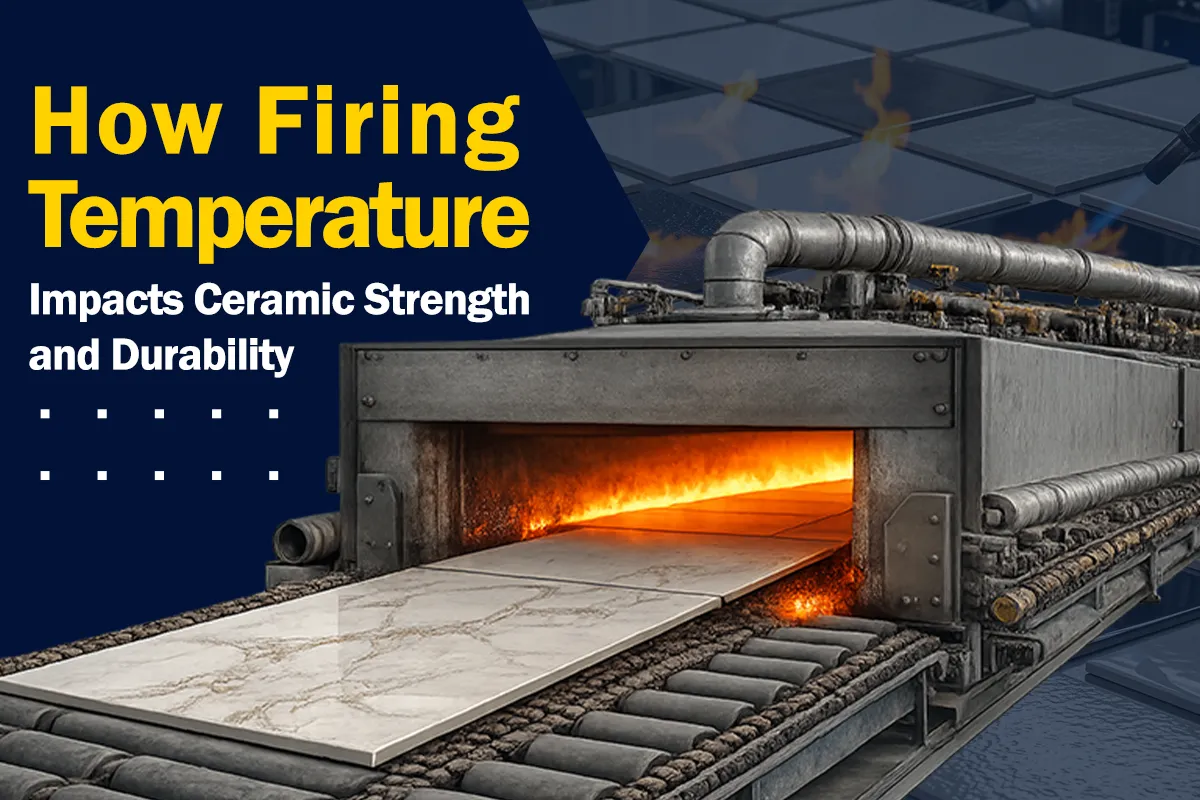
How Firing Temperature Impacts Ceramic Strength and Durability
Firing temperature plays a critical role in determining the strength, durability, appearance, and overall quality of ceramic products. During the firing process, ceramic materials undergo physical and chemical transformations that directly affect their final performance.
If the temperature is too low, the ceramic may remain weak and porous. If the temperature is too high, products can warp, crack, or become damaged. Understanding how firing temperature impacts ceramic properties is essential for manufacturers aiming to produce high-quality and durable ceramic products consistently.
Why Firing Temperature Matters in Ceramic Manufacturing
Firing temperature matters because:
- The Firing Process Changes Material Structure
During firing, ceramic materials are exposed to extremely high temperatures inside kilns. This heat causes particles within the clay body to bond together through a process called sintering. As the temperature increases, the material becomes denser, stronger, and less porous.
- Temperature Directly Affects Product Quality
The final strength and durability of ceramic products depend heavily on reaching the correct firing temperature. Proper temperature control ensures that products achieve the desired hardness, density, and resistance to moisture and mechanical stress.
How Low Firing Temperatures Affect Ceramics
- Weak Bonding Between Particles
When ceramics are fired at temperatures that are too low, the particles inside the material do not bond completely. This results in products with poor structural integrity and reduced strength.
- Increased Porosity and Water Absorption
Low firing temperatures often leave ceramics more porous, allowing water and moisture to penetrate the material more easily. This can reduce durability and increase the risk of cracking over time.
- Reduced Resistance to Wear and Stress
Underfired ceramics are generally less resistant to impact, abrasion, and mechanical stress. In industrial or high-use applications, this can significantly shorten product lifespan.
How High Firing Temperatures Affect Ceramics
- Improved Density and Strength
Properly increased firing temperatures help ceramic particles fuse more effectively, creating denser and stronger products with improved durability.
- Excessive Heat Can Cause Damage
However, firing temperatures that are too high can also create problems. Overfiring may cause warping, deformation, bloating, or cracking due to excessive melting within the ceramic body.
- Glaze Defects and Surface Problems
Incorrect firing temperatures can also affect glazes, leading to defects such as blistering, crawling, pinholes, or uneven finishes that reduce product quality.
Read More: Common Causes of Equipment Failure in Ceramic Production Lines
The Relationship Between Temperature and Ceramic Durability
- Stronger Ceramics Have Better Long-Term Performance
Ceramics fired at the correct temperature are more resistant to moisture, chemicals, wear, and temperature changes. This improves their long-term durability and reliability in both industrial and consumer applications.
- Consistency Is Essential
Maintaining consistent firing temperatures throughout the kiln is equally important. Uneven heat distribution can result in inconsistent product quality, with some pieces becoming weaker or defective.
The Importance of Kiln Performance and Temperature Control
- Reliable Kiln Systems Improve Product Quality
Efficient kiln operation is essential for maintaining precise temperature control. Faulty heating elements, damaged insulation, poor airflow, or inaccurate sensors can all affect firing consistency and lead to defective products.
- Monitoring Systems Help Prevent Problems
Modern kiln monitoring systems, thermocouples, and temperature sensors allow manufacturers to track firing conditions accurately and make adjustments when needed. This helps maintain stable production quality and reduce waste.
Read More: Essential Spare Parts for Ceramic Presses and Kilns
Common Challenges in Temperature Management
- Heat Loss and Insulation Problems
Damaged kiln insulation can lead to uneven temperatures and increased energy consumption. Proper insulation maintenance helps maintain firing consistency and efficiency.
- Sensor and Thermocouple Failure
Inaccurate temperature readings caused by worn or damaged sensors can lead to underfiring or overfiring, both of which negatively impact ceramic strength and durability.
- Poor Maintenance Increases Risk
Lack of preventive maintenance on kiln systems can result in unstable firing conditions, unexpected downtime, and inconsistent product quality.
How SAEN Supports Ceramic Manufacturing Operations
SAEN provides high-quality industrial spare parts and technical support for ceramic manufacturing systems across the UAE. From heating elements and thermocouples to hydraulic components, motors, sensors, and automation solutions, SAEN helps ceramic manufacturers maintain reliable kiln performance and efficient production operations.
With dependable products and expert support, SAEN assists businesses in reducing downtime, improving efficiency, and maintaining consistent product quality. Contact SAEN for further information.
Conclusion
Firing temperature has a direct impact on the strength, durability, and overall quality of ceramic products. Proper temperature control allows ceramic materials to achieve the ideal density, hardness, and resistance needed for long-lasting performance. Both underfiring and overfiring can create structural weaknesses and product defects, making accurate kiln operation essential in ceramic manufacturing.
By maintaining reliable kiln systems, using quality components, and following proper maintenance practices, manufacturers can improve product consistency, reduce waste, and achieve better production efficiency.
Leave a Reply
No comments have been sent yet!