
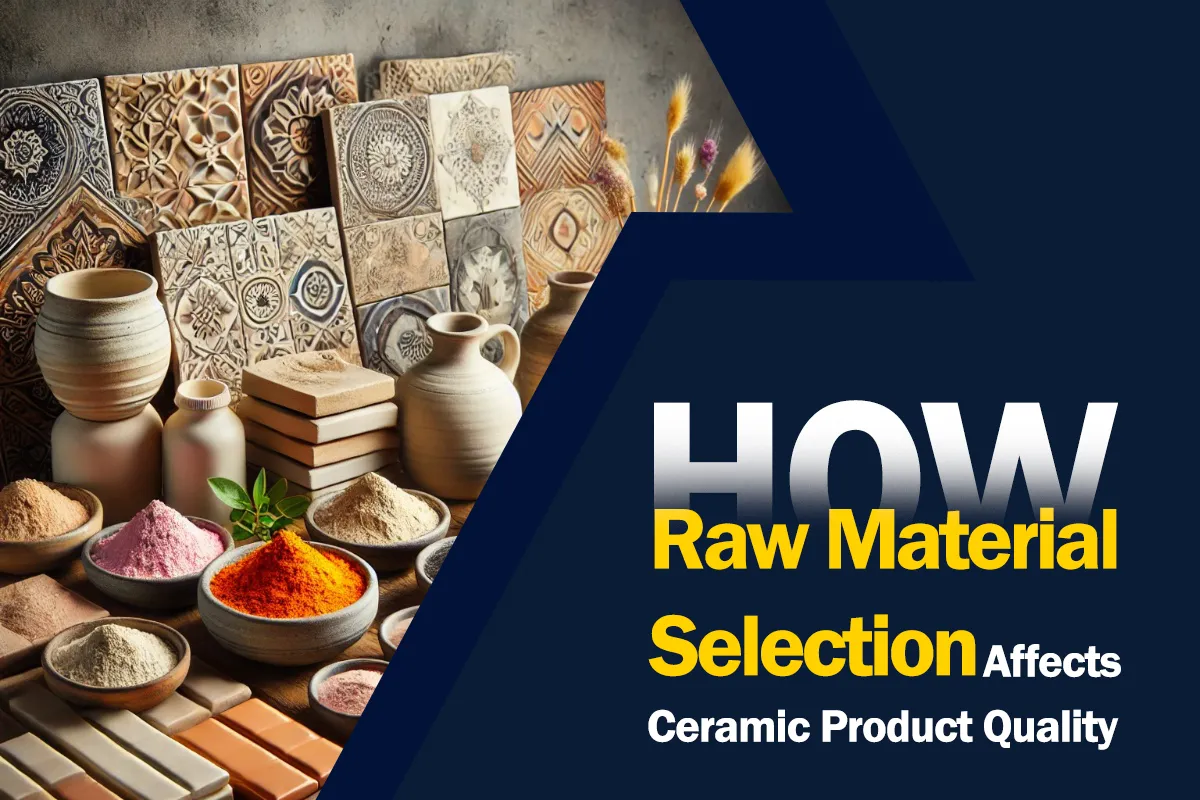
How Raw Material Selection Affects Ceramic Product Quality
Raw material selection is one of the most important factors in ceramic manufacturing. The quality, purity, and composition of raw materials directly influence the strength, appearance, durability, and overall performance of ceramic products. Whether producing ceramic tiles, sanitary ware, tableware, or industrial ceramics, manufacturers must carefully choose materials that meet both technical and commercial requirements.
The Importance of Raw Materials in Ceramic Manufacturing
Ceramic products are created through a combination of natural and processed materials that are shaped and fired at high temperatures. Each raw material contributes specific properties to the final product, including hardness, color, thermal resistance, water absorption, and mechanical strength.
Even small variations in raw material quality can affect production consistency and lead to defects such as cracking, warping, surface imperfections, or reduced durability. For this reason, selecting the right materials is essential for maintaining product quality and production efficiency.
Read More: Ceramic Press Machine Spare Parts: Essential Components for Reliable Production
Key Raw Materials Used in Ceramics
Several core materials are commonly used in ceramic production, and each plays a different role in the manufacturing process.
Clay
Clay is the primary material in most ceramic products because of its plasticity and ability to be shaped easily. Different types of clay offer different levels of strength, flexibility, and firing behavior. High-quality clay improves workability and helps reduce forming defects during production.
Kaolin
Kaolin is widely used for its purity and white color. It improves the brightness, smoothness, and overall appearance of ceramic products. In many applications, kaolin also contributes to strength and thermal stability.
Feldspar
Feldspar acts as a flux material during firing. It helps lower the melting temperature and improves vitrification, which enhances product density and mechanical strength. Proper feldspar selection can also improve surface finish and reduce porosity.
Silica
Silica helps control shrinkage and improves structural stability during firing. It also contributes to hardness and wear resistance in the final product. However, incorrect silica content can increase the risk of cracking or thermal stress.
How Raw Material Quality Impacts Final Products
The purity and consistency of raw materials have a direct effect on ceramic performance. Impurities such as iron, organic materials, or unwanted minerals can change product color, weaken the structure, or create firing defects.
Consistent raw material quality is also important for maintaining stable production conditions. Variations in particle size, moisture content, or chemical composition can affect shaping, drying, and firing processes, leading to inconsistent results and increased waste.
For manufacturers, reliable raw material sourcing helps improve both product quality and production efficiency.
Also Read: How to Buy Reliable & Certified Food Machinery Spare Parts in the UAE
The Role of Particle Size and Composition
Particle size distribution is another important factor in ceramic manufacturing. Fine particles improve surface smoothness and density, while larger particles may affect strength and uniformity.
Chemical composition must also be carefully controlled. The balance between clay, silica, feldspar, and other additives determines how the ceramic body behaves during firing and how the final product performs under real operating conditions.
Proper formulation allows manufacturers to achieve the desired balance between strength, appearance, durability, and cost.
Quality Control in Raw Material Selection
Professional ceramic manufacturers typically perform strict testing and inspection before raw materials enter production. Common quality checks include chemical analysis, moisture testing, particle size evaluation, and impurity detection.
By monitoring raw material quality consistently, manufacturers can reduce defects, improve product reliability, and maintain compliance with industry standards.
Final Thoughts
Raw material selection plays a critical role in determining the quality and performance of ceramic products. From strength and durability to appearance and production efficiency, every stage of ceramic manufacturing depends on the properties of the materials used.
Choosing high-quality and consistent raw materials helps manufacturers reduce defects, improve product performance, and achieve better long-term results. In today’s competitive ceramic industry, raw material quality is not just a technical factor — it is a key part of delivering reliable and high-value products.
Looking for Reliable Ceramic Materials or Manufacturing Support?
At SAEN, we support industrial buyers and manufacturers with reliable sourcing solutions, quality-focused products, and professional export services across international markets. With a strong commitment to consistency, technical standards, and customer satisfaction, SAEN helps clients secure the materials and industrial products they need for efficient and dependable operations.
Working with experienced suppliers and quality-focused manufacturers is essential for producing high-performance ceramic products. Reliable sourcing, technical expertise, and consistent material quality can significantly improve manufacturing results and product durability.
Contact SAEN today to learn more about ceramic raw materials, production solutions, and product quality support.
Leave a Reply
No comments have been sent yet!