
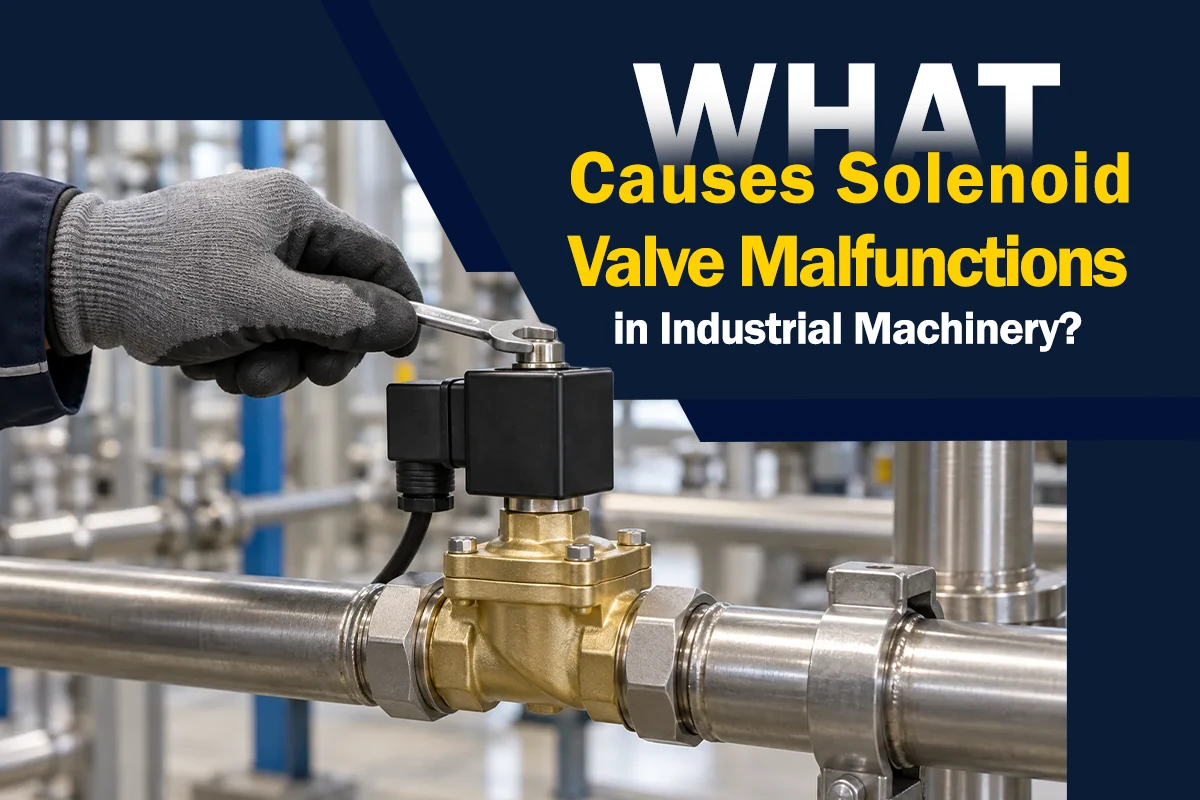
What Causes Solenoid Valve Malfunctions in Industrial Machinery?
Solenoid valves are widely used in industrial machinery to control the flow of air, water, oil, steam, and other fluids. They are commonly found in pneumatic systems, hydraulic equipment, automated production lines, packaging machinery, and process control applications.
A malfunctioning solenoid valve can cause equipment to stop, operate inconsistently, lose pressure, or fail to control fluid flow correctly. In some cases, the valve may not open or close when commanded. In other situations, it may leak, respond slowly, or produce unusual noise.
Understanding the common causes of solenoid valve malfunctions helps maintenance teams identify the source of a problem before replacing components. Proper troubleshooting can also reduce unnecessary maintenance costs and help prevent recurring equipment failures.
How Does an Industrial Solenoid Valve Work?
A solenoid valve uses an electromagnetic coil to control the movement of an internal mechanism, such as a plunger, armature, or spool. When the coil receives an electrical signal, it generates a magnetic field that moves the internal mechanism and changes the valve’s flow position.
Depending on its design, a solenoid valve may be normally closed (NC), normally open (NO), direct-acting, or pilot-operated. These design differences determine how the valve responds to electrical signals and pressure conditions.
Because solenoid valves combine electrical and mechanical operation, their malfunctions can originate from the coil, wiring, internal moving parts, fluid conditions, pressure supply, or installation.
1. Electrical Problems and Incorrect Coil Voltage
Electrical faults are among the common causes of solenoid valve malfunction. If the coil does not receive the correct voltage or electrical signal, it may fail to generate sufficient magnetic force to operate the valve.
Electrical problems may include:
- No power supply to the solenoid coil
- Incorrect coil voltage or frequency
- Loose electrical connections
- Damaged cables or connectors
- Blown fuses or faulty control relays
- Corroded terminals or damaged wiring
For example, a valve designed for a 24 V DC coil may not operate correctly if the supply voltage is significantly lower than its rated value. A coil connected to an unsuitable voltage or frequency may also overheat or fail prematurely.
Maintenance teams should check the coil nameplate and measure the voltage at the coil terminals under operating conditions. The measured value should be compared with the manufacturer’s specifications.
2. Solenoid Coil Burnout
A solenoid coil can fail when it is exposed to excessive electrical or thermal stress. A burned-out coil may prevent the valve from operating even when the control system sends the correct command.
Common causes of coil burnout include:
- Incorrect voltage or frequency
- Electrical short circuits
- Excessive ambient temperature
- High fluid or valve-body temperature
- Moisture entering the coil or electrical connector
- Incorrect coil duty rating
- A stuck armature that prevents normal valve movement
Repeated coil failure should not be treated as an isolated electrical problem. Before installing a replacement coil, investigate the operating voltage, temperature, duty cycle, and condition of the internal valve mechanism.
3. Contamination Inside the Valve
Contamination is a frequent cause of solenoid valve problems in industrial fluid and pneumatic systems. Dirt, metal particles, rust, scale, oil deposits, and other foreign materials can interfere with the movement of internal components.
Contamination may block the valve orifice, pilot passage, armature tube, or sealing surface. As a result, the valve may fail to open fully, remain partially open, or become unable to close properly.
Typical symptoms of contamination include:
- Restricted or irregular fluid flow
- Slow valve response
- Internal leakage
- Valve sticking or intermittent operation
- Unusual noise during actuation
To reduce contamination-related failures, maintain appropriate filtration, flush piping where required, and follow the manufacturer’s cleaning procedures. If debris repeatedly enters the valve, investigate the cleanliness of the entire system rather than replacing the valve alone.
4. Pressure Problems in the System
Solenoid valves are designed to operate within specific pressure ranges. If the system pressure or differential pressure falls outside the valve’s operating limits, the valve may not function correctly.
Pressure-related problems may include:
- Insufficient pressure for a pilot-operated valve
- Excessive inlet pressure
- Pressure fluctuations during operation
- Unexpected back pressure at the outlet
- Blocked inlet or outlet passages
- Incorrect pressure regulator settings
Some pilot-operated valves require a minimum differential pressure to open or close properly. If the available pressure difference is too low, the valve may remain closed or open only partially.
Always check the valve’s rated pressure range and minimum differential pressure requirements. Confirm that the actual operating conditions match the specifications of the selected valve.
5. Damaged or Stuck Armature and Plunger
The armature or plunger is responsible for transferring the magnetic force generated by the coil into mechanical movement. If this component becomes damaged, bent, worn, or contaminated, the valve may fail to shift correctly.
Possible causes include:
- Foreign particles inside the armature tube
- Corrosion or excessive wear
- Damaged internal springs
- Mechanical deformation
- Incorrect assembly after maintenance
- Excessive friction between moving components
A valve with a stuck armature may produce a clicking sound without achieving the required flow position. In such cases, the electrical coil may still be functioning, while the mechanical movement is restricted.
Inspect internal components according to the manufacturer’s maintenance instructions. Replace damaged parts or the complete valve assembly when repair is not recommended.
6. Worn Seals, Diaphragms, and Valve Seats
Seals, diaphragms, and valve seats help control fluid flow and prevent leakage. Over time, these components may deteriorate because of wear, pressure, temperature, chemical exposure, or unsuitable material selection.
When sealing components become damaged, the valve may fail to close completely or allow fluid to pass when it should be shut off.
Common signs of sealing problems include:
- Continuous flow through a closed valve
- Fluid leakage from the valve body
- Reduced pressure control
- Irregular operation during opening and closing
- Visible damage to diaphragms or sealing surfaces
When replacing seals or diaphragms, verify their material compatibility with the controlled medium, operating temperature, and pressure conditions. Using an unsuitable sealing material may lead to repeated failures.
7. Incorrect Valve Selection
A solenoid valve may malfunction because it was not correctly selected for the application. Even a new valve can perform poorly if its design, size, material, or operating characteristics do not match the system requirements.
Important selection factors include:
- Valve function: normally open or normally closed
- Direct-acting or pilot-operated design
- Required flow rate and valve orifice size
- Operating pressure and differential pressure
- Fluid type and viscosity
- Operating and ambient temperature
- Body and seal material
- Coil voltage and electrical connection
For example, a valve designed for compressed air may not be suitable for a particular liquid or chemical. Similarly, a valve with an unsuitable flow capacity may restrict the system or respond more slowly than required.
Before purchasing a replacement, compare the complete technical specifications rather than relying only on the valve’s physical dimensions or connection size.
8. Incorrect Installation
Improper installation can affect solenoid valve performance and service life. Incorrect flow direction, unsuitable mounting, damaged threads, or excessive mechanical stress may prevent the valve from operating as intended.
Installation-related problems may include:
- Valve installed against the specified flow direction
- Incorrect connection of inlet and outlet ports
- Excessive tightening of pipe connections
- Incorrect wiring or connector installation
- Missing or incorrectly installed seals
- Pipework placing mechanical stress on the valve body
Check the installation instructions and valve markings before commissioning. Ensure that the piping, electrical connections, and mounting arrangement meet the manufacturer’s requirements.
9. Excessive Temperature and Harsh Operating Conditions
Industrial solenoid valves may operate in environments exposed to high temperatures, vibration, moisture, dust, or corrosive substances. If the valve or coil is not suitable for these conditions, its performance and service life may be reduced.
Excessive temperature can damage coil insulation, seals, diaphragms, and other internal components. Moisture can cause corrosion or electrical faults, while vibration may loosen connections or contribute to mechanical wear.
When selecting a replacement valve, check the permitted ambient temperature, fluid temperature, enclosure protection rating, and material compatibility. For harsh environments, choose a valve and coil configuration designed for the actual installation conditions.
Read More: How Firing Temperature Impacts Ceramic Strength and Durability
10. Incorrect Duty Cycle or Continuous Energization
Some solenoid coils are designed for continuous operation, while others are rated for specific intermittent duty cycles. Operating a coil beyond its rated duty conditions can cause excessive heating and premature failure.
Problems may occur when a valve is energized for longer periods than intended, when the control system does not release the signal correctly, or when the coil is installed in an environment with insufficient heat dissipation.
Before replacing a coil, confirm its duty rating and check whether the control sequence matches the valve’s intended operating conditions. A coil should not be selected solely because its voltage matches the available power supply.
Common Solenoid Valve Symptoms and Their Possible Causes
The following guide can help maintenance teams identify which areas to inspect first. These are possible causes, not definitive diagnoses; several faults can produce similar symptoms.
| Symptom | Possible Causes |
|---|---|
| Valve does not open | No power, incorrect voltage, burned coil, stuck armature, unsuitable pressure conditions |
| Valve does not close | Contamination, damaged seal, worn valve seat, incorrect installation, residual electrical signal |
| Valve opens partially | Low differential pressure, blocked passage, damaged diaphragm, incorrect valve selection |
| Coil overheats | Incorrect voltage, excessive temperature, unsuitable duty cycle, stuck armature |
| Valve leaks | Worn seals, damaged valve seat, contamination, incompatible materials |
| Valve makes unusual noise | Loose components, unstable pressure, armature problems, water hammer, electrical issues |
| Valve operates intermittently | Loose wiring, voltage fluctuation, contamination, unstable pressure, mechanical sticking |
How to Troubleshoot a Malfunctioning Solenoid Valve
Before replacing a solenoid valve, follow a systematic troubleshooting process to determine whether the fault is electrical, mechanical, or related to the operating system.
Step 1: Check the Electrical Supply
Verify that the valve receives the correct control signal and supply voltage. Inspect the fuse, relay, wiring, connector, and coil terminals. Measure voltage at the coil under operating conditions and compare it with the manufacturer’s specifications.
Step 2: Inspect the Coil
Check for visible damage, overheating, moisture, or unusual odor. If appropriate, measure coil resistance with the circuit isolated and de-energized, then compare the reading with the manufacturer’s specified value. An open or abnormal resistance reading may indicate coil damage.
Step 3: Verify Pressure and Flow Conditions
Check inlet pressure, outlet pressure, differential pressure, and flow conditions. Confirm that the valve is operating within its specified range and that the inlet and outlet passages are not blocked.
Step 4: Check for Contamination
Inspect the valve and upstream filtration system for dirt, scale, rust, or other debris. If cleaning is permitted by the manufacturer, clean the relevant components using the recommended procedure.
Step 5: Inspect Mechanical Components
Check the armature, plunger, spring, diaphragm, seals, and valve seat for wear, damage, or restricted movement. Replace defective components according to the manufacturer’s repair instructions.
Step 6: Confirm Correct Installation
Verify the valve’s flow direction, mounting position, port connections, electrical wiring, and pressure rating. If the valve has a manual override, it may be used for diagnostic purposes only when permitted by the equipment procedure and safety requirements.
Always isolate electrical and fluid power sources, relieve stored pressure, and follow the manufacturer’s safety instructions before dismantling a valve. Electrical measurements and live testing should be performed by qualified personnel using suitable instruments.
How to Prevent Solenoid Valve Malfunctions
Preventive maintenance can help reduce the frequency of solenoid valve failures and improve the reliability of industrial machinery.
- Use valves with specifications suitable for the application.
- Maintain appropriate filtration and fluid cleanliness.
- Inspect electrical connections and coil condition periodically.
- Monitor operating pressure and temperature.
- Check for leakage, unusual noise, and slow response.
- Follow the manufacturer’s installation and maintenance instructions.
- Replace worn seals and damaged components when required.
- Keep records of recurring failures and replacement history.
- Maintain critical spare coils and valves where justified by equipment risk.
If a valve fails repeatedly, investigate the underlying system conditions instead of replacing the same component without identifying the root cause.
Choosing the Right Solenoid Valve Spare Parts
When a solenoid valve or coil needs replacement, accurate identification is essential. Selecting a component based only on appearance or nominal connection size may result in an incompatible replacement.
Before requesting a quotation, collect the following information:
- Valve manufacturer and model
- Original part number
- Coil voltage and frequency
- Valve function and operating type
- Fluid or gas being controlled
- Operating pressure and temperature
- Connection size and mounting arrangement
- Required quantity and delivery location
For older or discontinued valves, photographs, technical drawings, and equipment details can help suppliers identify possible sourcing options. Any proposed alternative should be checked against the original valve’s operating requirements before installation.
Source Industrial Solenoid Valve Spare Parts with SAEN
Solenoid valve malfunctions can affect the performance of pneumatic systems, hydraulic equipment, and automated industrial machinery. Identifying the correct replacement requires attention to electrical specifications, pressure conditions, fluid compatibility, and installation requirements.
SAEN Industrial Spare Parts Supplier in UAE supports industrial businesses with sourcing requirements across automation, electrical, mechanical, hydraulic, and other industrial component categories. For solenoid valve and control component inquiries, providing accurate technical information can help make the sourcing process more efficient.
Explore SAEN industrial spare parts supply solutions.
To request a quotation, contact SAEN with the valve manufacturer, model, part number, coil specifications, operating conditions, required quantity, and delivery location.
Conclusion
Solenoid valve malfunctions can result from electrical faults, coil burnout, contamination, pressure problems, damaged internal components, incorrect installation, or unsuitable valve selection. Because these valves combine electrical and mechanical operation, troubleshooting should examine both the control circuit and the fluid system.
By checking operating conditions, maintaining system cleanliness, verifying compatibility, and sourcing suitable replacement components, industrial maintenance teams can reduce recurring failures and support more reliable machinery operation.
Leave a Reply
No comments have been sent yet!