
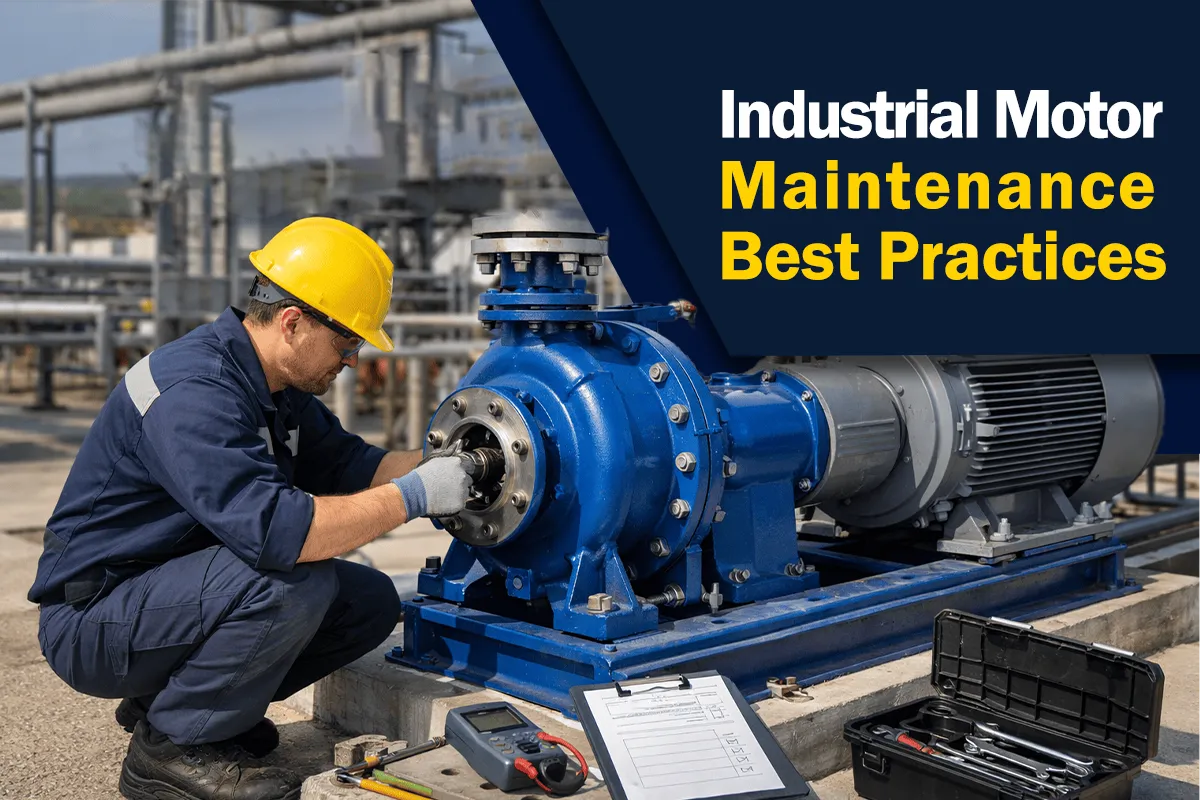
Industrial Motor Maintenance Best Practices
Industrial motors are essential components in manufacturing equipment, conveyors, pumps, compressors, fans, mixers, and automated production systems. A motor failure can quickly interrupt production and create significant maintenance costs. Regular and systematic maintenance helps manufacturers improve motor reliability, extend service life, reduce energy waste, and prevent unexpected downtime.
Why Industrial Motor Maintenance Matters
Industrial motors often operate for long periods under demanding conditions. Continuous operation, excessive loads, heat, vibration, dust, moisture, and inadequate lubrication can gradually affect motor performance.
Without proper maintenance, small problems can develop into serious failures involving bearings, windings, insulation, shafts, or electrical connections. A well-planned maintenance program allows these issues to be identified before they result in major equipment breakdowns.
1. Perform Regular Visual Inspections
Visual inspection should be one of the simplest and most frequent motor maintenance activities. Technicians should check the motor housing, cooling system, cables, terminals, mounting points, and surrounding area.
Look for signs such as:
- Excessive dust or dirt
- Oil or grease leakage
- Damaged cables
- Loose electrical connections
- Corrosion
- Overheating or discoloration
- Unusual physical damage
Keeping the motor and its surrounding area clean can also help maintain proper cooling and prevent contaminants from affecting sensitive components.
2. Monitor Motor Temperature
Excessive temperature is one of the major causes of motor deterioration. High operating temperatures can accelerate insulation aging and reduce the service life of internal components.
Maintenance teams should monitor motor temperature and investigate unusual increases. Overloading, blocked ventilation, bearing problems, high ambient temperatures, and electrical issues can all contribute to overheating.
Thermal monitoring can be particularly useful for motors operating continuously or in high-temperature industrial environments.
Read More: How Firing Temperature Impacts Ceramic Strength and Durability
3. Check Bearings and Lubrication
Bearings are critical to smooth motor operation. Insufficient lubrication, excessive lubrication, contamination, or incorrect lubricant selection can cause premature bearing failure.
Technicians should follow the motor manufacturer’s lubrication recommendations and inspect bearings for unusual noise, vibration, heat, or resistance.
If a bearing shows significant wear, replacing it before failure can prevent additional damage to the motor shaft and other connected equipment.
4. Monitor Vibration
Unusual vibration can be an early indication of mechanical or electrical problems. Bearing wear, shaft misalignment, rotor imbalance, loose mounting bolts, and coupling problems can all create abnormal vibration.
Regular vibration monitoring allows maintenance teams to identify changes in motor condition before they become serious failures. For critical motors, vibration analysis can be incorporated into a predictive maintenance program.
5. Inspect Electrical Connections
Loose or damaged electrical connections can create resistance, heat, voltage imbalance, and unreliable motor operation. Regular inspections should include terminals, cables, connectors, and other electrical components.
Technicians should also monitor current and voltage conditions. Significant imbalance or abnormal current consumption may indicate an electrical or mechanical problem that requires further investigation.
6. Keep Cooling Systems Clean
Industrial motors depend on effective heat dissipation. Blocked air passages, dirty cooling fans, or contaminated ventilation openings can prevent the motor from operating at the correct temperature.
Cooling systems should be inspected and cleaned according to the operating environment and manufacturer’s recommendations. Motors installed in dusty production areas may require more frequent cleaning than those operating in clean environments.
7. Check Alignment and Mechanical Load
Motor performance is affected by the equipment connected to it. Misalignment between the motor shaft and driven equipment can increase vibration, bearing loads, and energy consumption.
Maintenance teams should inspect couplings, shafts, belts, pulleys, and other mechanical connections. Correct alignment helps reduce unnecessary stress and improves the reliability of both the motor and the driven machine.
8. Avoid Overloading
Operating a motor beyond its intended capacity can cause overheating and accelerate component deterioration. Repeated overload conditions may damage insulation and windings and significantly shorten motor life.
Motor load should therefore be monitored, especially when production conditions change or machinery is modified. If a motor repeatedly operates near or above its rated capacity, the application should be reviewed to determine whether a different motor or operating configuration is required.
9. Use Condition Monitoring
Traditional preventive maintenance is important, but condition monitoring can provide additional insight into motor health. Depending on the application, maintenance teams can monitor:
Tracking these parameters over time makes it easier to identify gradual changes and schedule maintenance before a failure causes an unexpected production stop.
10. Keep Critical Motor Spare Parts Available
Even with proper maintenance, industrial motors and their components can eventually fail. Maintaining an inventory of critical spare parts can reduce repair time and minimize production interruptions.
Depending on the equipment, important spares may include bearings, cooling fans, terminal components, encoders, sensors, couplings, and replacement motors. Spare parts should be selected based on equipment specifications and compatibility rather than simply choosing the lowest-cost option.
Industrial Motor Maintenance Checklist
| Maintenance Activity | Recommended Purpose |
|---|---|
| Visual inspection | Identify physical damage and contamination |
| Temperature monitoring | Detect overheating |
| Bearing inspection | Prevent mechanical failure |
| Lubrication | Reduce friction and wear |
| Vibration monitoring | Detect imbalance, misalignment, and bearing problems |
| Electrical inspection | Identify loose or damaged connections |
| Cooling system cleaning | Maintain proper heat dissipation |
| Alignment checks | Reduce mechanical stress |
| Load monitoring | Prevent overheating and overload |
| Condition monitoring | Identify early signs of failure |
Need a Reliable Supplier?
If you need reliable industrial motors, automation components, or spare parts for your maintenance operations, SAEN can help you find the right solution for your equipment. With experience in supplying industrial spare parts for manufacturing and automation applications, our team can assist with identifying suitable components based on your equipment requirements. Contact SAEN today to discuss your spare parts needs and find a reliable solution for maintaining your industrial operations.
Conclusion
Effective industrial motor maintenance combines regular inspections, temperature and vibration monitoring, proper lubrication, electrical checks, cooling system maintenance, alignment, and load control. By following a structured maintenance program and keeping critical spare parts available, industrial facilities can reduce unexpected failures, improve equipment reliability, and extend motor service life.
Leave a Reply
No comments have been sent yet!