
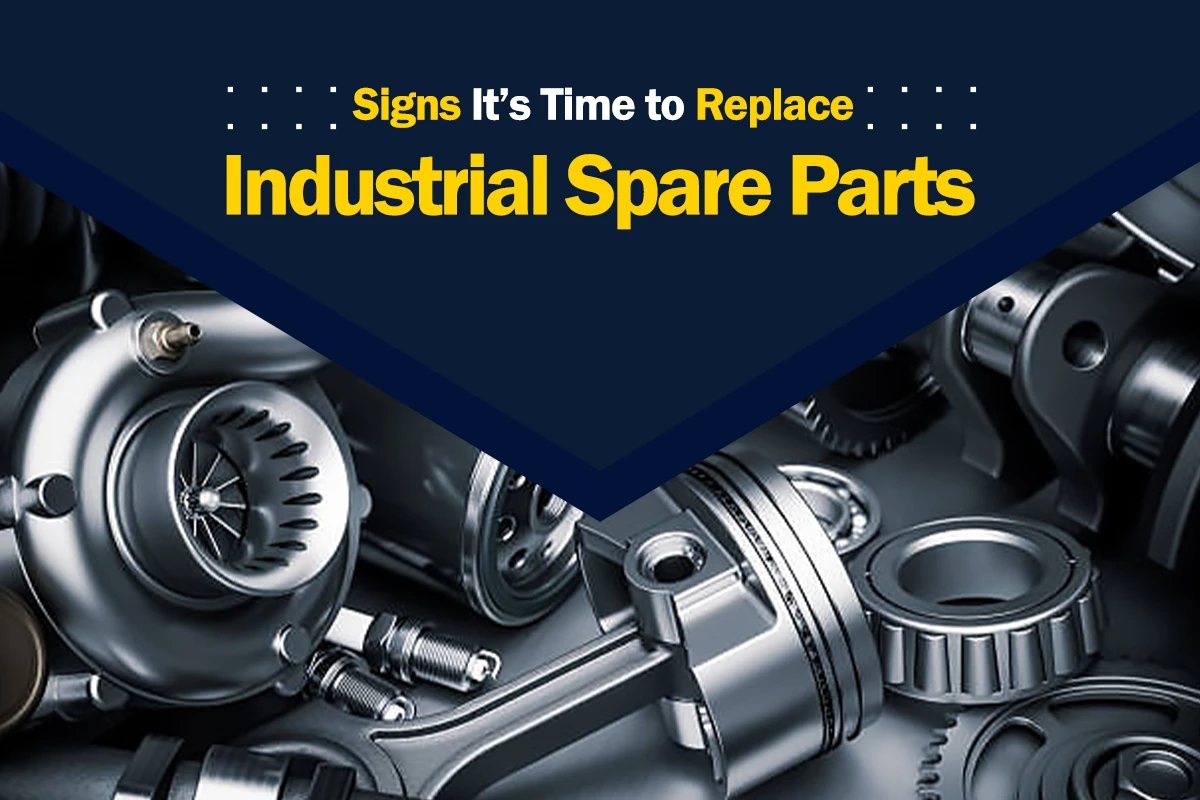
Signs It’s Time to Replace Industrial Spare Parts
How to know when industrial spare parts need replacement
Knowing when industrial spare parts need replacement is essential to prevent unexpected downtime and maintain efficient operations. Signs that a part may need replacing include visible wear or damage, unusual noises, vibrations, or overheating during operation, and a noticeable decline in machine performance or output quality.
Additionally, parts that have exceeded their recommended service life or show repeated failures despite repairs are strong indicators that replacement is necessary. By regularly monitoring equipment and identifying these warning signs early, manufacturers can schedule timely replacements, avoid costly emergency repairs, and ensure continuous, smooth operation of their industrial machinery.
How can failing spare parts lead to costly downtime or production delays?
Failing spare parts can lead to costly downtime or production delays because even a single critical component malfunction can halt an entire production line. When parts such as motors, bearings, sensors, or actuators fail unexpectedly, machinery stops functioning, and production schedules are disrupted. This not only results in lost output and missed deadlines but also increases labor costs as maintenance teams rush to identify and fix the problem.
Additionally, emergency repairs often require expedited shipping of replacement parts, which adds extra expense. Over time, repeated unplanned downtime can damage equipment, reduce product quality, and negatively impact overall operational efficiency, making proactive spare parts management essential for minimizing costs and maintaining smooth production.
When to replace spare parts to avoid costly equipment downtime
Spare parts should be replaced before they fail to avoid costly equipment downtime and production delays. Key indicators for replacement include excessive wear, corrosion, cracks, unusual noises, decreased performance, or repeated minor malfunctions.
Parts that have reached or exceeded their recommended service life should also be proactively replaced, even if they appear functional, as aging components are more prone to sudden failure. By monitoring equipment condition and adhering to a preventive replacement schedule, manufacturers can maintain smooth operations, reduce emergency repair costs, and extend the overall lifespan of their machinery.
What role does equipment noise, vibration, or overheating play in signaling part failure?
Equipment noise, vibration, and overheating are often early warning signs that a spare part is failing or approaching the end of its service life. Unusual noises, such as grinding, squealing, or knocking, can indicate worn bearings, misaligned components, or loose fittings. Excessive vibration may point to imbalance, misalignment, or deteriorating mechanical parts like couplings, shafts, or gears.
Overheating often signals friction due to worn or improperly lubricated components, electrical issues, or failing motors. By paying close attention to these symptoms, maintenance teams can detect problems early, schedule timely replacements, and prevent minor issues from escalating into costly machine breakdowns or prolonged production downtime.
How can factories decide whether to repair or replace a part?
- Assess the extent of damage: Determine if the part is lightly worn, repairable, or severely damaged.
- Compare repair vs. replacement costs: Evaluate whether repairing is cost-effective compared to purchasing a new part.
- Consider equipment downtime: Decide based on how long repair or replacement will take and its impact on production.
- Check service life: If the part has reached or exceeded its recommended lifespan, replacement is usually the better option.
- Evaluate reliability after repair: Consider whether a repaired part will perform as reliably as a new one.
- Review safety implications: Replace parts that could compromise safety if repaired instead of replaced.
- Factor in availability: If replacement parts are readily available and repairs are complex, replacement may be faster.
How should managers prioritize spare parts replacement in complex industrial machinery?
Managers should prioritize spare parts replacement in complex industrial machinery by focusing first on components that are critical to production continuity, safety, and product quality. Parts whose failure would halt the entire production line or cause significant downtime — such as motors, actuators, sensors, and control modules — should be given the highest priority.
Secondary priority can be assigned to components that affect efficiency or performance but do not immediately stop operations. Managers should also consider historical failure data, manufacturer recommendations, and the part’s remaining service life when scheduling replacements. By systematically assessing risk, impact, and criticality, managers can ensure that maintenance resources are used effectively, minimizing unplanned downtime and optimizing overall machinery performance.
Read More: How to Reduce Downtime in Ceramic Manufacturing Through Proper Spare Parts Management
Conclusion
In conclusion, recognizing the signs that industrial spare parts need replacement is essential for maintaining smooth and efficient operations. By monitoring indicators such as unusual noise, vibration, overheating, and wear, and by following a proactive maintenance strategy, factories can prevent unexpected equipment failures and costly downtime. Prioritizing critical components, using genuine parts, and making informed decisions on repair versus replacement all contribute to longer equipment life, lower maintenance costs, and more reliable production. Effective spare parts management ultimately ensures that industrial machinery operates safely, efficiently, and without unnecessary interruptions.
Leave a Reply
No comments have been sent yet!