
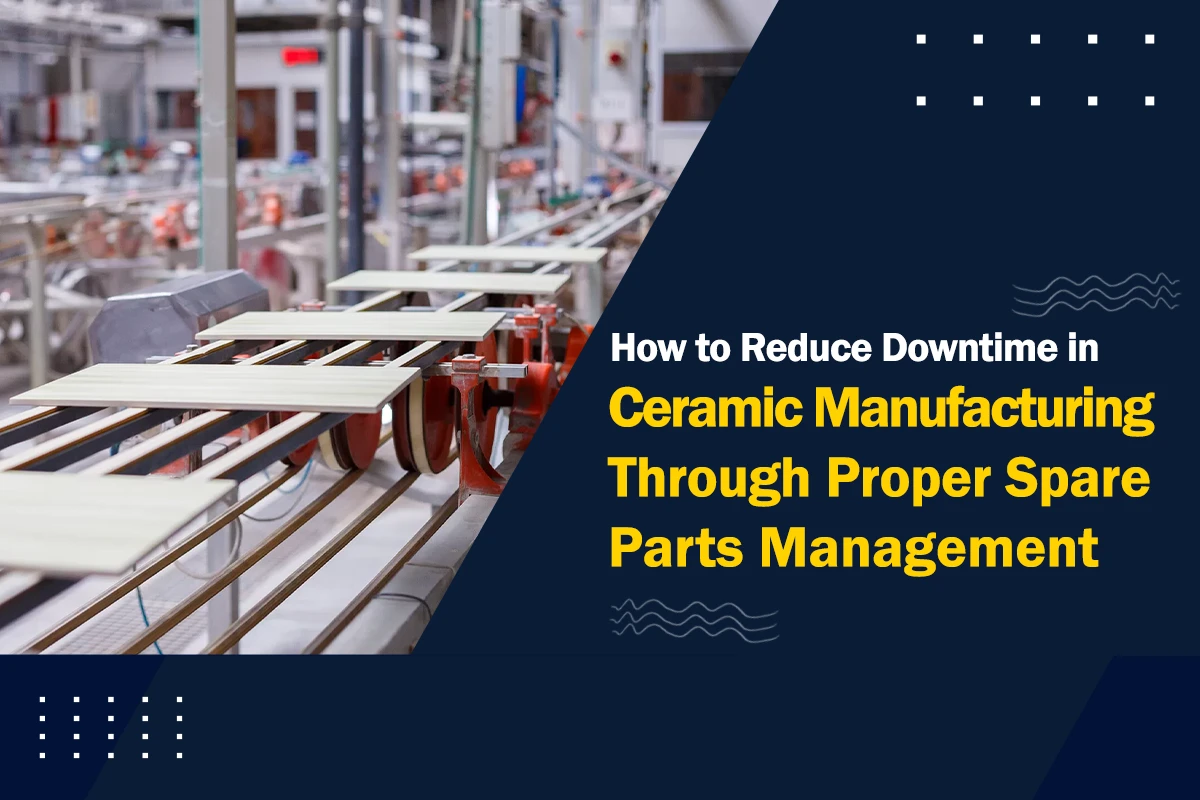
How to Reduce Downtime in Ceramic Manufacturing Through Proper Spare Parts Management
Why does downtime occur so often in ceramic manufacturing?
Downtime occurs frequently in ceramic manufacturing because the production process relies heavily on continuous, high-temperature, and precision-driven equipment — such as kilns, presses, conveyors, and glazing lines — that operate under intense mechanical and thermal stress. Over time, these conditions cause natural wear and tear on critical components like bearings, seals, motors, and sensors. When even a single part fails, it can halt the entire production line, leading to significant losses in time and energy.
Another major reason for frequent downtime is inadequate maintenance and spare parts planning. Many factories delay preventive maintenance or fail to keep essential spare parts readily available, resulting in longer repair times when unexpected breakdowns occur. Environmental factors like dust, humidity, and high operating temperatures — common in ceramic plants — further accelerate equipment deterioration. Together, these factors make unplanned downtime a recurring challenge, underscoring the need for proactive maintenance and proper spare parts management.
What are the main causes of equipment failure in ceramic production lines?
The main causes of equipment failure in ceramic production lines stem from both mechanical stress and operational challenges. High-temperature processes, heavy loads, and continuous operation put significant strain on machinery such as kilns, mixers, presses, and conveyors, leading to wear and tear on components like bearings, belts, motors, and seals. Abrasive materials, such as clay and glaze, can also accelerate erosion of moving parts, causing blockages or uneven operation.
Operational factors play a key role as well. Improper handling, inconsistent maintenance schedules, or using substandard spare parts can lead to premature breakdowns. Electrical faults, such as motor or sensor failures, are another frequent cause, often exacerbated by dusty or humid environments typical of ceramic plants. Finally, human error, including incorrect setup or adjustments of machines, can trigger malfunctions that halt production. These factors combined make it crucial for ceramic manufacturers to implement proper maintenance routines and robust spare parts management.
How can predictive maintenance and spare parts planning work together?
Predictive maintenance and spare parts planning work hand-in-hand to significantly reduce downtime in ceramic manufacturing. Predictive maintenance uses data from sensors, equipment logs, and IoT devices to anticipate when a machine or component is likely to fail, allowing maintenance teams to act before a breakdown occurs. However, predicting a failure alone isn’t enough — the right spare parts must be available at the right time to execute repairs quickly and efficiently.
How often should spare parts inventories be reviewed or updated?
- Quarterly: Review high-priority or fast-moving spare parts.
- Every six months: Check less critical or slow-moving parts.
- Immediately after use: Update inventory whenever a part is replaced or consumed.
- Ongoing digital tracking: Use inventory management systems to monitor stock in real-time and trigger automatic reorders when levels fall below minimum thresholds.
This approach ensures availability, reduces emergency procurement, and minimizes production downtime.
Also read: Top 5 Spare Parts for Ceramic Industry Machines (2025 Guide)
Why is it important to use genuine spare parts instead of low-cost alternatives?
Using genuine spare parts instead of low-cost alternatives is crucial in ceramic manufacturing because equipment reliability and product quality depend on precise, durable components. Genuine parts are designed and tested by the original equipment manufacturer (OEM) to meet exact specifications, ensuring proper fit, performance, and safety.
In contrast, low-cost or counterfeit parts may wear out faster, fit incorrectly, or fail under high-temperature and high-stress conditions, leading to frequent breakdowns and unplanned downtime.
Additionally, using authentic spare parts protects warranties, reduces long-term maintenance costs, and maintains consistent product quality. While cheaper alternatives might seem cost-effective initially, they often result in higher repair costs, production losses, and potential damage to expensive machinery.
For ceramic factories aiming to optimize efficiency and minimize downtime, investing in genuine spare parts is a smart strategy that safeguards both equipment and overall production performance.
What steps can factory managers take today to start reducing downtime immediately?
- Conduct a spare parts audit: Identify critical components and ensure sufficient stock is available.
- Implement preventive maintenance: Schedule regular inspections and maintenance for key machinery.
- Train staff: Educate operators on proper machine handling and early signs of equipment failure.
- Use genuine spare parts: Replace worn-out components with OEM parts to ensure reliability.
- Set up digital tracking: Monitor machine performance and spare parts inventory using software or spreadsheets.
- Prioritize critical machines: Focus maintenance and monitoring on equipment that has the highest impact on production.
- Develop a response plan: Create a clear workflow for quickly addressing equipment failures when they occur.
Conclusion
In conclusion, minimizing downtime in ceramic manufacturing requires a combination of proactive maintenance, strategic spare parts management, and the use of genuine components. By regularly reviewing inventories, anticipating equipment failures through predictive maintenance, and ensuring critical parts are always available, factories can significantly reduce unplanned stoppages, protect expensive machinery, and maintain consistent production quality. Implementing these strategies not only improves operational efficiency but also enhances profitability, making proper spare parts management an essential component of a successful ceramic manufacturing operation.
Leave a Reply
No comments have been sent yet!